
Signs Your Business Has Outgrown Its Current Software

Technology should help business growth–not block it. When organizations keep expanding, the everyday requirements get more complicated, and the software that used to support basic operations, may not keep up anymore

A lot of companies still run outdated or ready-made solutions because swapping them feels expensive, or just too disruptive. Still, using software that no longer matches what you actually need can lower output, raise day to day operational costs, and make future growth feel kind of stuck

Noticing the signals that your business has outgrown its current software is often the first move, toward making a smart technology investment

Why Business Software Matters

Business software has this central role in how daily operations are handled , including customer relationships, finance workflows, internal communication, and how decisions get made. When everything is working efficiently, staff can really lean into value creation, instead of wasting time on manual chores or technical limitations, kind of like that.

As your organization grows, your software should evolve with it. If it doesn’t, the gap between your business needs and your technology capabilities continues to widen.

Here are the key indicators that it may be time to upgrade or invest in a custom software solution.

1. Your Team Relies on Manual Workarounds

One of the clearest warning signs is when employees frequently rely on spreadsheets, emails, or manual data entry to complete tasks that should be automated.

Common examples include:

  • Copying data between systems
  • Manually generating reports
  • Re-entering customer information
  • Tracking approvals through email
  • Maintaining duplicate records

These workarounds consume valuable time and increase the likelihood of human error.

Modern business software should automate repetitive tasks and streamline workflows.

2. Your Software Doesn’t Support Business Growth

Software that works well for a small team may struggle as your business expands.

If your system feels sluggish, keeps crashing, or can’t cope with more users, more dealings, or even more records, then yeah scalability has become a trouble or what not.

Scalable software is designed to grow alongside your business, allowing you to expand without replacing your entire technology infrastructure every few years.

3. You’re Using Multiple Disconnected Systems

Many businesses slowly take on various software tools for accounting, customer management, inventory, communication, reporting, and project management, kind of like assembling different parts over time.

Even if each app works pretty well on its own, the thing is when systems are left disconnected, they usually end up causing operational challenges.

These include:

  • Duplicate data
  • Inconsistent reporting
  • Manual synchronization
  • Poor collaboration
  • Limited visibility across departments

Integrated software solutions eliminate these inefficiencies by creating a centralized platform where information flows seamlessly between business functions.

4. Reporting Takes Too Long

Business leaders depend on accurate, real-time information to make informed decisions.

If generating reports requires hours of manual work—or if reports contain inconsistent data—your software may no longer meet your operational needs.

Modern software provides dashboards, analytics, and automated reporting that enable decision-makers to access reliable information quickly.

5. Employees Are Frustrated

Your employees interact with business software every day.

If they regularly complain about slow performance, confusing interfaces, frequent errors, or repetitive tasks, productivity is likely suffering.

An intuitive, user-friendly system improves efficiency, reduces training time, and supports better employee satisfaction.

Technology should simplify work—not create additional obstacles.

6. Security Concerns Are Increasing

Cybersecurity threats continue to evolve, making outdated software a significant business risk.

Older applications may lack:

  • Modern authentication methods
  • Data encryption
  • Role-based access controls
  • Regular security updates
  • Compliance support

Businesses handling customer information or sensitive data should regularly evaluate whether their software meets current security standards.

7. Your Customers Expect More Than Your Software Can Deliver

Customer expectations continue to rise.

Businesses increasingly need features such as:

  • Online self-service portals
  • Mobile accessibility
  • Real-time notifications
  • Personalized experiences
  • Faster response times

If your existing software prevents you from delivering these capabilities, customer satisfaction may decline while competitors continue to innovate.

Technology should support exceptional customer experiences—not limit them.

8. Integrations Are Becoming Difficult

Today’s businesses rely on cloud services, payment gateways, CRM platforms, communication tools, and third-party applications.

If your current software can’t integrate well enough with modern tech, your employees spend more time managing the systems than serving customers.

Flexible software architecture enables seamless integration, improving efficiency and reducing operational complexity.

9. Maintenance Costs Keep Increasing

Many organizations continue investing significant resources into maintaining outdated software.

Sometimes you see a lot of frequent bug fixes, pricey upgrades, compatibility hurdles, and those sudden emergency support requests, and it kind of tells you that the existing system is getting more costly than just replacing it.

Evaluating the long-term return on investment is essential when deciding whether to modernize your software.

10. Your Business Processes Have Changed

Businesses rarely operate exactly as they did several years ago.

You may have introduced new services, expanded into new markets, hired additional teams, or adopted new operational workflows.

If your software still reflects outdated business processes, it creates unnecessary inefficiencies.

Custom software evolves alongside your organization, ensuring technology continues supporting your strategic objectives.

Should You Upgrade or Build Custom Software?

The right solution depends on your business requirements.

For organizations with fairly standard operational needs, moving to a more capable commercial platform might be enough, in a sort of sensible way.


Yet some businesses have specialized workflows, very industry specific compliance duties, or they’re aiming for long-term scalability—so in those cases, building custom software can make much more sense.

Custom solutions provide:

  • Tailored functionality
  • Better scalability
  • Enhanced security
  • Seamless integrations
  • Improved user experiences
  • Greater flexibility for future growth

Rather than adapting your business to fit software limitations, custom software is designed around your unique operations.

Final Thoughts

When you outgrow the software you have now, it doesn’t mean that earlier investment was a flop or anything. It’s more like a clue that your company is changing, and in the middle of it. Growth has this way of pulling your systems along too, even if you didn’t ask for it, you know?

The main thing is spotting the warning signs before the outdated tech starts chewing into day to day output, what customers feel, and the momentum of the business. Sometimes it looks small at first, then suddenly it’s everywhere.

When organizations pick software that actually matches their operational aims , it helps support expansion, and it can adjust as the business shifts. In practice that tends to boost efficiency, lower operational hazards, and build a steadier base for what comes next.

Technology should empower your business to move forward. If your current software is slowing you down instead of supporting your growth, it may be time to consider a more capable solution.
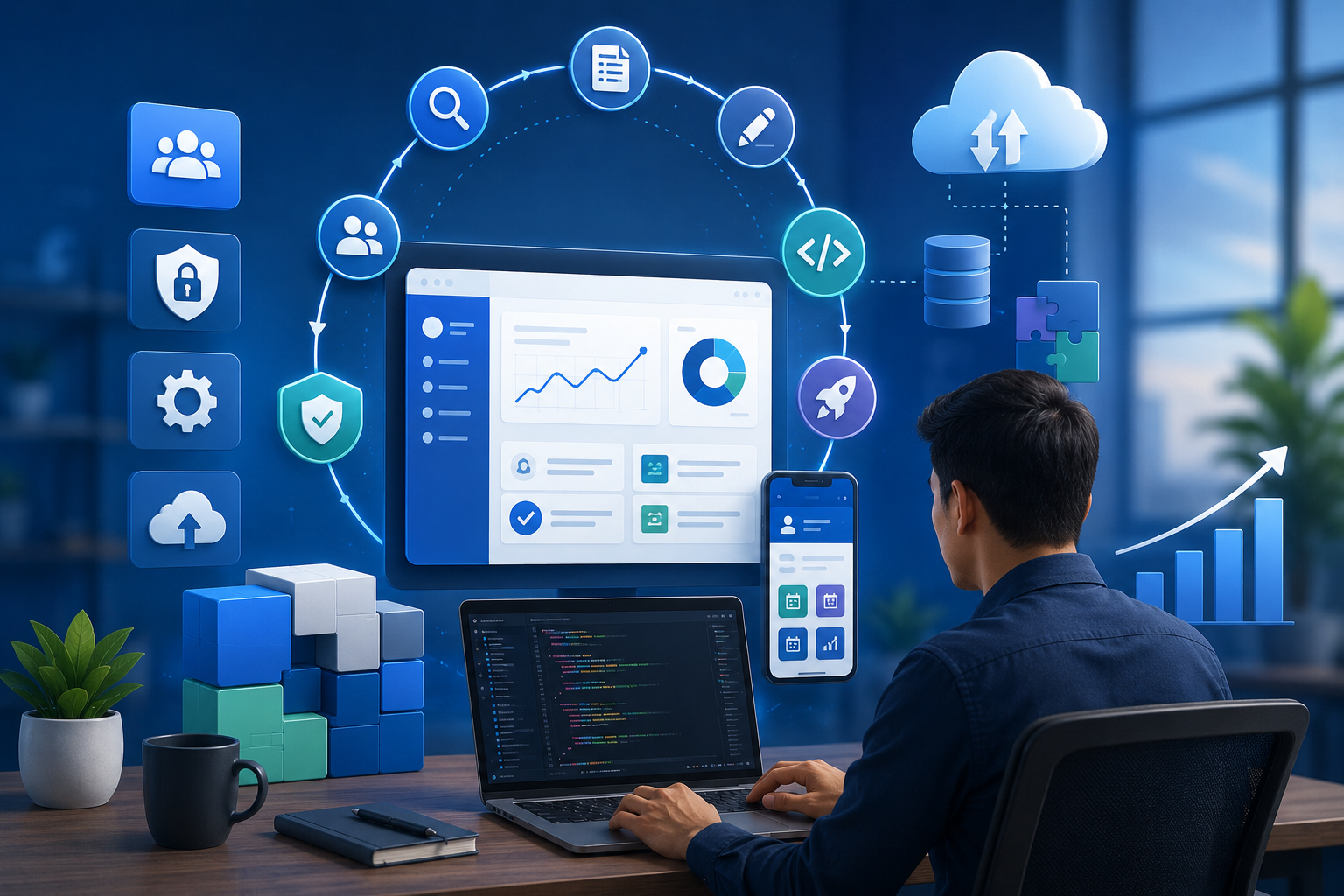
Custom Software Development Services for Businesses: What You Need to Know

In today’s digital economy, companies feel like they’re always under pressure to boost efficiency, improve customer experiences , and pivot fast when market demands start shifting. Sure, ready-made software can handle basic day to day operations, but it often hits a wall when the business needs more flexibility, higher scalability, or specific industry functionality that generic tools just can’t really cover.

That’s why custom software development services end up feeling less like a simple tech bill and more like a strategic investment, you know, the kind that supports long run goals.

Custom software is built and shaped for one organization’s own workflows , operational priorities, and overall growth strategy. Instead of trying to force your company to fit the software, the system is designed around your needs— not the other way around, even if that sounds obvious.

So if your business is looking into custom software development, it helps to know the benefits, the development process, and the main considerations. When you understand those parts, you can make a more informed decision, with less guesswork and more clarity.

What Is Custom Software Development?

Custom software development is the process of designing, developing, deploying, and maintaining software applications tailored to the specific needs of a business.

These solutions can include:

  • Customer Relationship Management (CRM) systems
  • Enterprise Resource Planning (ERP) software
  • Inventory management systems
  • Project management platforms
  • Healthcare applications
  • Financial management software
  • Booking and scheduling systems
  • Mobile applications
  • Customer portals
  • Business automation tools

Because the software is developed specifically for your organization, every feature supports your workflows, objectives, and operational requirements.

Why Businesses Choose Custom Software

Every business runs a bit differently, even if they are in the same industry and all, you know, the big picture seems similar. Still, each company usually has own ways of working, different compliance obligations , and separate customer expectations that kind of steer everything.

Generic software often forces a business to maneuver around the system’s fixed capabilities. Custom software, on the other hand, removes that kind of box by matching the real workflows that are already in place, and it can boost operational efficiency too.

Some of the primary reasons businesses invest in custom software include:

  • Improved productivity through workflow automation
  • Better integration with existing systems
  • Enhanced data security
  • Greater scalability as the business grows
  • Competitive differentiation
  • Reduced dependence on multiple third-party applications

Instead of managing several disconnected tools, organizations can centralize operations within a single, integrated platform.

Key Benefits of Custom Software Development

Tailored to Your Business Processes

One of the biggest plus sides of custom software is that it is sort of made just for your business, not some “one size” setup.

Every feature, workflow, dashboard, and reporting function is built around your day to day operational needs, so your employees can work more efficiently without having to reshuffle or adapt to unnecessary things.

Scalability for Long-Term Growth

Business needs tend to shift over time.

Custom software can be nudged and stretched with fresh modules, new integrations, and extra capabilities as your company grows. When you’re opening another location or expanding your range of services , even when your customer base is getting bigger the system can keep moving with your business, kind of like it is always there, ready to add.

Better Security and Compliance

Data security is a growing concern for organizations across every industry.

Custom software provides greater control over authentication, access permissions, encryption, and security policies. Businesses operating in regulated industries can also implement compliance requirements directly into the application.

Regular security updates and proactive maintenance further reduce potential vulnerabilities.

Seamless System Integration

Modern businesses rely on multiple digital platforms, including accounting software, payment gateways, customer databases, communication tools, and cloud services.

Custom software can integrate these systems into a unified environment, reducing manual data entry, minimizing errors, and improving operational visibility.

The Custom Software Development Process

A successful software project requires more than writing code. It involves careful planning, collaboration, testing, and continuous improvement.

A structured development process typically includes:

1. Requirement Discovery

The project begins with understanding business goals, operational challenges, user requirements, and technical expectations.

This discovery phase establishes the project scope and defines success criteria.

2. Solution Planning

Based on the gathered requirements, the development team creates the software architecture, feature roadmap, technology stack, and implementation strategy.

Proper planning minimizes project risks and ensures efficient development.

3. UI and UX Design

An intuitive user interface is essential for software adoption.

Designers develop wireframes and interactive prototypes that prioritize usability, accessibility, and efficient workflows before development begins.

4. Development

Developers build the application using modern programming frameworks and coding standards while maintaining quality, security, and performance throughout the project.

5. Quality Assurance and Testing

Before deployment , the software gets some comprehensive testing going on, to spot functional oddities, security weak spots, compatibility snags, and also performance slowdowns, you know.

Testing makes sure the application runs in a steady way across different gadgets and environments , which should reduce unpleasant surprises later.

6. Deployment and Ongoing Support

After successful testing, the software is deployed into the production environment.

In the long term, maintenance, periodic updates, continuous performance monitoring and also feature enhancements keep the app giving real value, as business requirements  keep evolving.

Industries That Benefit from Custom Software

Custom software is valuable across numerous industries, including:

  • Healthcare
  • Finance
  • Manufacturing
  • Education
  • Retail
  • Logistics
  • Construction
  • Hospitality
  • Professional services
  • Real estate

Organizations in these sectors often require specialized workflows that cannot be fully supported by standard software products.

How to Choose the Right Development Partner

Selecting the right software development partner is one of the most important decisions in the project lifecycle.

Look for a provider that demonstrates:

  • Proven technical expertise
  • Experience delivering similar projects
  • Transparent communication
  • Well-defined development methodology
  • Strong quality assurance practices
  • Ongoing maintenance and support services
  • Scalable development capabilities

A reliable development partner should understand your business objectives—not simply your technical requirements.

Common Challenges to Avoid

Many software projects encounter avoidable obstacles due to inadequate planning or unrealistic expectations.

Common challenges include:

  • Unclear project requirements
  • Frequent scope changes
  • Limited stakeholder involvement
  • Insufficient testing
  • Ignoring user feedback
  • Lack of long-term maintenance planning

Final Thoughts

Custom software development is kinda more than just making a digital product, it’s really about putting together a solution that fits your business strategy, ramps up operational efficiency , and helps fuel long-term growth.

If it’s planned with care and delivered in a professional way, custom software can smooth out day to day processes, reinforce security, level up customer experiences, and end up giving you a durable competitive edge that sticks around.


Check our all news