Static Website vs Dynamic Website: Which One Does Your Business Actually Need?

When you’re planning a business website , one of the first things you’ll end up juggling is deciding between a static website and a dynamic one. And yeah, it sounds simple at first , but it is more important than it seems because it touches your website’s cost, speed, flexibility , and that long-term scalability you’ll care about later.

In 2026 , companies aren’t only chasing an online presence , they’re trying to build a place that actually supports growth, marketing efforts, and customer engagement. When you understand the difference between static and dynamic websites, you’ll be in a better position to pick the right base or framework for your digital success, sooner rather than later. 

What Is a Static Website?

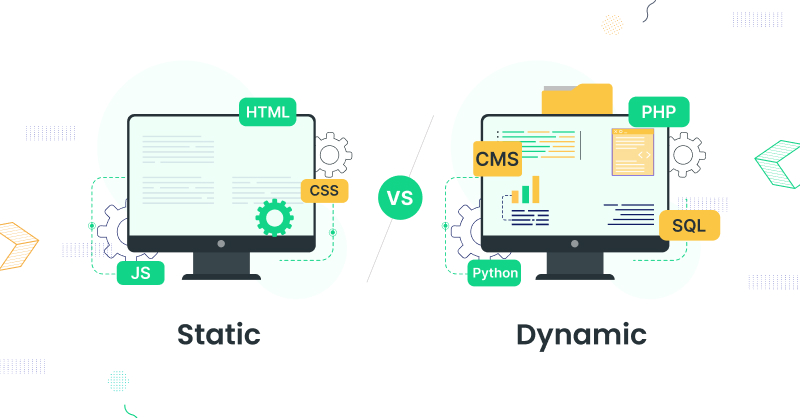
A static website is made up of fixed web pages where content remains the same for every visitor. These pages are built using basic technologies like HTML, CSS, and sometimes JavaScript.

Each page is pre-built and delivered exactly as stored on the server. If any changes are needed, the developer must manually update the code.

Static websites are commonly used for:

  • Business landing pages
  • Portfolio websites
  • Company information websites
  • Small informational websites

Because they are simple in structure, static websites are fast, lightweight, and easy to host.

What Is a Dynamic Website?

A dynamic website generates content in real time based on user interaction, database content, or backend logic. These websites are built using technologies like PHP, Python, Node.js, and databases such as MySQL or MongoDB.

Dynamic websites allow users to interact with the platform, such as logging in, submitting forms, making purchases, or viewing personalized content.

Examples include:

Dynamic websites are highly flexible and designed for functionality beyond simple information display.

Key Differences Between Static and Dynamic Websites

The main difference lies in how content is delivered and updated.

Static websites display fixed content, while dynamic websites generate content based on user actions or database inputs.

Static websites are faster and cheaper to build, but they lack flexibility. Dynamic websites are more powerful and scalable but require more development effort and maintenance.

Performance and Speed

Static websites are like really fast, because they just ship pre-built files right to the users. There isnt any need for database stuff , and there is no real server side computation happening.  

Dynamic websites tend to feel a bit heavier, since they handle incoming requests, they talk to databases, and they generate content in real time too. Even so, with today’s optimization methods, plus caching tricks that help a lot, these dynamic sites can still land on excellent performance, in practice. 

Maintenance and Updates

Static websites require manual updates for every change. This can become time-consuming if the website needs frequent content updates.

Dynamic websites allow content to be updated easily through admin panels or content management systems. This makes them more suitable for businesses that regularly update blogs, products, or services.

Scalability

Static websites are kinda good for small-scale stuff where the content stays mostly the same , for a while. Still, they are not really great for growing businesses, especially if they need frequent updates or more advanced features.

Dynamic websites on the other hand, are very scalable . They can handle thousands of users , huge databases , and pretty complex functionalities , so they end up being a better fit for long-term business expansion.

Security

Static websites are generally more secure because they do not rely on databases or server-side processing, reducing the risk of attacks.

Dynamic websites require stronger security measures because they involve databases, user inputs, and backend logic. However, with proper development practices, they can be made highly secure.

Cost Factor

Static websites are kinda more cost effective and, pretty quick to build. Theyre usually a good fit for startups or small businesses that have limited budgets, and well, not a lot of time to waste.

Dynamic websites, on the other hand, take more time and resources to develop. So they can feel more expensive at first. Still, they tend to bring better lasting benefits for companies that need actual functionality, plus room to grow over time. 

Which One Should Your Business Choose?

A static website is the right choice if your business needs:

  • A simple online presence
  • Limited content updates
  • Fast loading speed
  • Low development cost
  • Informational website or portfolio

A dynamic website is the better option if your business requires:

  • User interaction and login systems
  • E-commerce functionality
  • Regular content updates
  • Scalability for future growth
  • Advanced features and integrations

Final Verdict

In the “static vs dynamic” website debate there really isn’t one clear universal winner. Honestly it comes down to what you’re trying to achieve for your business, that’s the main point.

If what you need is something simple, quick, and easy on the budget then a static website can be totally enough. But if your focus is more on growth, stronger customer engagement, and long-term scalability, then a dynamic website is the smarter pick, and it usually pays off later.

At YouthTech Solutions LLP, we guide businesses to pick and build the right kind of website that matches their goals , their budget, and also their plans for future expansion. Whether you’re after a lightweight static site, or a more powerful dynamic web application , laying the right groundwork can make a noticeable difference to your online results.

React JS vs. Vue JS: Which Frontend Framework Is Best for Your Web Project in 2026?

Choosing the right frontend framework is, kind of, one of the most important calls you can make when building a modern website or web application. The frontend pretty much handles everything users see and touch, so it really matters if you want a fluid, speedy and engaging experience

When you look at the most used JavaScript frameworks, React JS and Vue JS stand out as two of the popular picks for teams and companies. They both bring strong capabilities and good performance, yet they were made with different ideas in mind. So if you’re starting a new web project in 2026, it helps to understand how React differs from Vue, then you can decide without guessing too much 

What Is React JS?

React JS is basically an open-source JavaScript library, which is used for building interactive user interfaces, especially when you have single page applications (SPAs). It is component-based so developers can build reusable UI bits that make coding a bit easier and also calmer to maintain.

In general, React is often known for its flexibility, broad ecosystem, and for the way it can deal with large scale applications. It also fits well with different libraries and tools, so it ends up being a preferred choice for organizations that are building complicated, and scalable web products. 

What Is Vue JS?

Vue JS is this progressive JavaScript framework, basically made to keep frontend work simple and efficient, you know. It comes with an intuitive structure, so it feels easier for developers to get started and actually implement things compared to a lot of other frameworks.  


Vue sort of brings together the most useful sides of modern frontend development with a soft learning curve, not too harsh. That’s why it works well for startups, small businesses, and for projects where you need quick delivery or fast build cycles, rather than taking things slow. 

Performance Comparison

Both React JS and Vue JS can deliver great performance. They rely on virtual DOM technology, so only the required sections of a webpage get updated, instead of doing a full page refresh. And this kind of approach tends to make rendering faster, plus the whole experience feels more fluid for the user.

For the majority of business websites and web apps, the actual performance gap between React and Vue usually is small. In practice, things like the overall application architecture, along with disciplined coding habits, often matter more for speed than the framework choice itself. 

Learning Curve and Development

Vue JS is widely considered easier to learn because of its straightforward syntax and well-organized documentation. Developers familiar with HTML, CSS, and JavaScript can often become productive with Vue quickly.

React has a slightly steeper learning curve, especially for beginners. Developers need to understand concepts such as JSX, state management, and component lifecycle. However, once mastered, React provides exceptional flexibility for building sophisticated applications.

Scalability

For businesses planning long-term growth, scalability is an important consideration.

React is highly scalable and is commonly used for enterprise applications, customer portals, SaaS platforms, and complex dashboards. Its extensive ecosystem allows developers to integrate advanced features as business requirements evolve.

Vue also supports scalable applications but is generally preferred for small to medium-sized projects where simplicity and faster development are priorities.

Community and Ecosystem

React kinda has one of the biggest developer communities in the world, so in practice businesses get to use all that abundance of learning material, plus third-party libraries, a bunch of development tools, and yes experienced developers too.

Vue also has an active growing community. And the ecosystem keeps expanding, so you end up with great documentation, along with several plugins that kind of make development simpler in day to day work.

Both of these frameworks stay updated regularly, and they do have solid community support, which helps them stay dependable options for modern web development even as things change. 

When Should You Choose React JS?

React is an excellent choice if your project requires:

  • Enterprise-level web applications
  • Custom dashboards and portals
  • SaaS platforms
  • Highly interactive user interfaces
  • Long-term scalability
  • Complex frontend architecture

Its flexibility makes it suitable for businesses expecting continuous growth and feature expansion.

When Should You Choose Vue JS?

Vue is a great option if your project involves:

  • Business websites
  • Startup applications
  • Admin panels
  • Small to medium-sized web applications
  • Rapid development
  • Projects with limited development time

Its simplicity allows developers to build high-quality applications quickly while maintaining clean and organized code.

Final Verdict

Both React JS and Vue JS are kind of outstanding frontend technologies in 2026. Neither framework is always the best one, honestly the “right” choice depends on your project goals, budget, the development timeline and also the future scalability needs, sort of.  

If you are working on a big, feature-rich application that you expect to grow for years, React JS tends to give more flexibility and a mature ecosystem that’s pretty solid. On the flip side if you are aiming for faster delivery, smoother upkeep, and a gentler learning curve, Vue JS becomes a really good pick.  

At YouthTech Solutions LLP, we help companies pick the most fitting frontend option based on their specific, unique requirements. Whether you’re creating a corporate site, a customer portal, or a custom web application, our team builds modern, responsive, and scalable solutions that support long term business progress.

Python vs. PHP for Web Development in 2026: Which Is the Better Choice for Your Business?

Picking the proper programming language for a website or a web application is kinda one of those big decisions, that you really can’t ignore. It ends up shaping how fast the site feels, how secure it stays under pressure , how well it scales later on, and even how painful maintenance becomes over the years. Right now, in 2026, the backend scene is still pretty much led by Python and PHP, they just keep showing up everywhere.

Even if both are strong and widely adopted, they don’t exactly match the same business expectations. If you dig into what each one does best, and where it starts to wobble, you can choose the right tech stack for your next project without guessing so much.

Python vs. PHP: Understanding the Difference

Python is this kinda versatile programming language, people like it because the syntax looks clean and it can also back more advanced stuff like artificial intelligence, automation and data analytics . Things such as frameworks , Django and Flask lets developers put together web applications that are secure plus scalable, pretty quickly in practice .

PHP on the other hand was made more for web development from the start. It still counts as one of the most reliable technologies when you want business websites, content management systems, and eCommerce platforms . Nowadays, modern frameworks like Laravel have pushed PHP ahead too, it feels faster , more robust and easier to keep up with, so maintaining it is kind of seamless compared to before. 

Performance and Development Speed

Both Python and PHP kind of offer excellent performance when teamed with modern frameworks . In general, PHP performs really well for classic websites and CMS-based platforms , while Python tends to shine when it comes to complex business logic and those big , multi-layer applications.

On the development side, you get fast application creation in both languages, even when the codebase gets messy . Really, the decision usually comes down to what the project needs , and not just the language you picked in the beginning. 

Scalability and Future Growth

If your business plans include trying to move into AI powered solutions, automation, or software at the enterprise level, Python kinda gives you more flexibility. I mean, its ecosystem has a bunch of technologies that are getting more and more important for businesses in 2026, so that helps.

Meanwhile, PHP is also quite scalable for business sites, online stores, and those customer portals. It’s still a really solid selection for companies that need dependable web solutions without adding extra complication or noise. 

Security

Security is kinda more about how you build things during development than it is about the programming language itself. In practice, both Python and PHP can offer secure frameworks, with built in features meant to shield applications from the usual cyber threats. Keeping updates regular, using solid secure coding rules, and doing the right kind of upkeep are essential anyway no matter what stack you end up choosing.

Which One Should Your Business Choose?

Python is ideal if you’re planning to build custom web applications, SaaS platforms, AI-based solutions, or applications that require advanced integrations and future scalability.

PHP is an excellent option for corporate websites, business portals, WordPress development, blogs, and eCommerce websites. It offers a cost-effective solution with a mature ecosystem and a large developer community.

Final Verdict

There isn’t a single winner in the Python vs. PHP debate because both technologies have distinct advantages. The best choice depends on your business goals, project complexity, budget, and future expansion plans.

If your priority is innovation, automation, and scalable web applications, Python is a strong investment. If you need a fast, secure, and reliable business website or eCommerce platform, PHP continues to be one of the best choices in 2026.

At YouthTech Solutions LLP, we help businesses choose the right technology based on their unique requirements. Whether you’re planning a corporate website, a custom web application, or a scalable digital platform, our team focuses on building solutions that support long-term business growth.

How to Choose the Right Web Development Company: Expert Tips for 2026

Your website functions as an online presence but it serves as a powerful business asset that generates growth while establishing trust with customers and maintaining communication with them. The choice of an appropriate web development company serves as a vital decision because it determines your brand success and customer satisfaction and business growth potential.

At YouthTech Solutions LLP, we understand how important it is to make the right choice. The guide provides you with agency evaluation methods which help you choose a trustworthy business partner.

1. Understand Your Project Requirements

Before approaching any web development company, it’s essential to clearly define your project goals. This step lays the foundation for a successful collaboration.

Define Your Business Goals

The first step requires users to determine their website goals. The developers need to understand your business goals because your explanation should specify whether your business needs lead generation or sales growth or brand recognition.

Identify Your Target Audience

Your audience research needs to be conducted for your website design because it determines which user experience elements to implement. The study needs to look at their preferences together with their behavioral patterns and their expected outcomes.

Choose the Right Platform

Decide whether you need a custom-built website, a CMS-based solution, or an eCommerce platform. This decision will influence your website’s performance, flexibility, and scalability.

Outline Key Features

The system requires all essential functionalities, which include contact forms and booking systems and integrations and payment gateways. The project budget requires us to divide features into two categories, which include must-have features and optional features.

2. Evaluate the Company’s Portfolio and Reviews

Once your requirements are clear, begin researching potential development partners.

Review Portfolio and Case Studies

Analyze previous projects to understand the company’s expertise, creativity, and ability to handle similar requirements.

Assess Technical Expertise

The agency needs to develop expertise in current technological frameworks and modern technologies. The project needs to be validated first before testing advanced functions of the system.

Check Industry Experience

Companies with experience in your industry understand your market better and can provide more effective solutions.

Explore Client Reviews

Look for feedback on trusted platforms. Consistent positive reviews indicate reliability and strong client relationships.

Request Client References

Direct conversations with previous clients provide you authentic evidence about their work patterns and their methods of communication and their project completion schedules.

3. Assess Development Process and Communication

A well-defined process ensures your project runs smoothly from start to finish.

Understand Their Methodology

Ask whether they follow Agile, Scrum, or other development approaches. Flexible methods allow changes during the project without delays.

Evaluate Communication Practices

Clear communication is key. Ensure they provide regular updates and use reliable collaboration tools.

Ensure Dedicated Project Management

A dedicated project manager keeps your project on track, manages timelines, and ensures smooth coordination.

  1. Focus on Design and User Experience

A successful website is not just about features—it’s about delivering a seamless user experience.

Prioritize User-Centric Design

Choose a company that focuses on intuitive navigation and user-friendly interfaces to enhance engagement.

Review UI/UX Work

Examine their design portfolio to ensure their style matches your brand identity.

Request Wireframes or Prototypes

Prototypes help you visualize the website structure before development begins, allowing early improvements.

5. Compare Pricing and Value

Budget is important, but it should not compromise quality.

Focus on Value Over Cost

Low-cost options may lead to poor performance and higher maintenance costs. Invest in quality for better long-term returns.

Request Transparent Quotes

A professional company will provide a clear cost breakdown, helping you understand your investment.

Understand Pricing Models

Choose between fixed pricing, hourly rates, or project-based models depending on your project scope.

6. Check Support and Maintenance Services

Website development doesn’t end at launch. Continuous support is essential.

Ask About Maintenance Plans

Ensure the company offers ongoing support for updates, bug fixes, and performance improvements.

Plan for Scalability

Your website should grow with your business. Choose a partner who can support future upgrades and expansions.

7. Review Legal and Security Aspects

Protecting your business and data is critical when working with a development company.

Sign a Non-Disclosure Agreement (NDA)

An NDA ensures your ideas and business information remain confidential.

Verify Security Practices

Ensure the company follows best practices for data protection and complies with industry standards.

Confirm Ownership Rights

Make sure you retain full ownership of your website, including code and intellectual property after project completion.

Conclusion

The selection of a web development company constitutes a vital business decision which will determine your company’s online presence for years to come. The process of hiring developers requires businesses to establish longterm partnerships with professionals who possess skills to help them achieve their business objectives.

YouthTech Solutions LLP develops web solutions which provide our clients with scalable and user-friendly and high-performing systems that match their specific business requirements. The guide provides expert tips which will help you select a development partner who matches your vision and will assist you in achieving success during 2026 and subsequent years.

How to Get Your Business Recommended by AI in 2026

Search behavior is evolving faster than ever. Users now use AI tools and conversational platforms to ask their questions instead of entering short keywords into search engines. The systems which provide AI-based search results and chat-based assistants now control which businesses receive exposure while they determine which companies stay hidden.

Your business will lose customers to competitors who appear in AI-generated answers when your brand fails to show up in those answers. This guide will help you understand how AI recommendation systems work and what you can do to position your business for better visibility in 2026.

The Shift from Traditional Search to AI-Driven Discovery

User behavior has fundamentally changed. People no longer search using fragmented keywords—they ask detailed, conversational questions like:

  • Which company is best for SEO services for franchises?
  • Who can improve visibility in AI search tools?
  • What is the most reliable digital marketing agency for multi-location businesses?

These types of queries carry intent, context, and expectations. AI tools analyze these inputs and generate direct answers—often recommending specific businesses.

This means visibility is no longer just about ranking on search engine results pages. It’s about being included in AI-generated responses.

Why Traditional SEO Alone Is No Longer Enough

Traditional SEO focused heavily on keyword density, backlinks, and page-level optimization. While these still matter, they are no longer sufficient on their own.

Modern AI-driven search systems prioritize:

  • Understanding user intent instead of exact keywords
  • Content relevance and depth over keyword repetition
  • Contextual meaning through semantic analysis
  • Real-world credibility and trust signals

AI systems use advanced technologies like natural language processing and machine learning to evaluate content quality. If your strategy relies only on outdated SEO techniques, your visibility will decline over time.

The Rise of Conversational and Voice Search

Voice assistants and chat-based tools are reshaping how users search for information. These queries are typically:

  • Longer and more natural
  • Question-based
  • Context-driven

Users search for SEO agencies by entering the query “best SEO agency” instead of asking which agency delivers optimal results for AI platform ranking enhancements.

Your content needs to meet actual spoken language patterns because that requirement exists for maintaining your competitive edge. The solution requires you to create content that mirrors natural conversations while using specific long-tail keywords for optimization purposes.

How AI Decides Which Businesses to Recommend

AI tools don’t randomly suggest businesses—they follow specific signals to determine trust and relevance. Here are the key factors:

1. Entity Recognition

AI systems need to clearly understand who you are. Your business must be defined as a recognizable entity with consistent information across the web.

2. Content Structure and Clarity

Well-organized content helps AI understand your expertise. If your website lacks structure, AI may struggle to interpret your relevance.

3. Relevance to User Queries

Your content must directly answer real user questions. If it doesn’t match the intent behind queries, it won’t appear in AI responses.

4. External Mentions and Authority

AI evaluates how often and where your business is mentioned. Mentions on trusted platforms, blogs, and directories strengthen your credibility.

What Is AI SEO and Why It Matters

AI SEO is the process of optimizing your business to appear in AI-generated answers rather than just traditional search rankings.

It focuses on:

  • Building strong entity authority
  • Using structured data for better understanding
  • Creating conversational, intent-driven content
  • Establishing trust across multiple platforms

This approach ensures your business is visible not only on search engines but also within AI-driven ecosystems.

Key Elements to Get Recommended by AI

1. Build Strong Entity Authority

Your business should be clearly defined across the internet. The requirement includes establishing unified brand identity and providing correct business details and establishing links to appropriate subjects.

AI systems analyze relationships between entities, so the more clearly your business is positioned, the better your chances of being recommended.

2. Use Structured Data Effectively

Structured data (schema markup) helps AI understand your website content more precisely.

Important schema types include:

  • Organization
  • Services
  • Reviews
  • FAQs
  • Local business details

This structured format improves your chances of appearing in rich results and AI answers.

3. Optimize for Conversational Queries

Content should match how users naturally ask questions.

Focus on:

  • Long-tail keywords
  • Question-based headings
  • Clear, direct answers

This increases your chances of being selected in voice search and AI-generated responses.

4. Strengthen Trust Signals

AI evaluates trust before making recommendations.

Important trust factors include:

  • Secure website (HTTPS)
  • Positive user reviews
  • Consistent brand mentions
  • High-quality backlinks

Building trust improves both search rankings and AI visibility.

5. Create Topic Clusters

AI doesn’t just evaluate individual pages—it understands topics as a whole.

A strong content structure includes:

  • A main “pillar” page covering a broad topic
  • Supporting articles targeting related subtopics
  • Internal linking between pages

This signals expertise and improves your authority in a subject area.

6. Increase Brand Mentions Across the Web

Your website alone is not enough. AI systems track external signals to validate your credibility.

Focus on:

  • Guest posting on industry blogs
  • Listing your business in relevant directories
  • Earning mentions from trusted sources

The more your brand is discussed in relevant contexts, the stronger your authority becomes.

A Simple AI SEO Framework for 2026

To improve your chances of being recommended by AI, follow this structured approach:

Step 1: Define your business entity clearly
Step 2: Implement structured data across all pages
Step 3: Create content based on real user questions
Step 4: Build high-quality mentions and backlinks
Step 5: Organize content into topic clusters

This framework helps AI systems understand, trust, and recommend your business more effectively.

Who Should Focus on AI SEO?

AI-focused optimization is especially valuable for:

  • Multi-location businesses struggling with visibility
  • Franchise businesses managing multiple markets
  • B2B companies targeting high-intent queries
  • Service-based businesses aiming for AI recommendations

If your customers are using AI tools to find solutions, you need to be part of those answers.

Final Thoughts

The process of obtaining AI business recommendations requires companies to create digital content that matches current search engine optimization standards.

The development process should create content which provides assistance to users and maintains proper organization and establishes credibility. The online reputation of your business needs to be established through identification methods while structured data implementation and brand recognition on trustworthy sites should be executed.

The advantages which businesses obtain from AI technologies will increase in value for organizations that implement these changes. Your business will achieve future search visibility and trustworthiness through your current investment in AI-based business strategies.

Frequently Asked Questions

How does AI choose which businesses to recommend?
AI looks at content relevance, structured data, trust signals, and consistent mentions across reliable sources.

Why is AI SEO important in 2026?
Because more users rely on conversational tools for search, and visibility is shifting from traditional rankings to AI-generated answers.

Does content structure matter for AI visibility?
Yes. Clear structure and topic clusters help AI understand your expertise and improve your chances of being recommended.

Can external mentions impact AI recommendations?
Absolutely. Mentions on trusted websites and platforms strengthen your credibility and authority.

How can I optimize for conversational search?
By creating content that answers real questions using natural language and long-tail keywords.

How to Select the Best CMS for Your Business in 2026

Your website functions as the main platform through which your business operates in the current digital era that determines company success through online presence. A successful website needs an efficient Content Management System (CMS) which controls all its functions for content creation and maintenance and content distribution. The choice of CMS system in 2026 requires organizations to make an operational decision because it will determine their website performance and search engine optimization results and system expansion capabilities and customer satisfaction.     

The process of choosing the best CMS platform becomes difficult because there are numerous options available in the current market. The guide simplifies your decision-making process by explaining different CMS types and essential evaluation criteria and methods for selecting a platform that suits your business requirements.

Why Your CMS Choice Is More Important Than Ever

A CMS has evolved into a primary business asset that powers all digital growth operations of your organization. The system determines three key aspects of your website which include content publishing speed and search engine performance.

Search engines of 2026 demonstrate advanced capabilities which enable them to deliver better user experiences than previous versions. Page speed and mobile responsiveness and structured content elements function as essential ranking factors. Your website will face competitive challenges if your CMS fails to deliver these essential capabilities.

Businesses currently run their operations through various digital platforms which include websites and applications and smart devices. A contemporary content management system needs to provide complete content management capabilities for all digital distribution channels.

Why Businesses Should Use a CMS

A CMS simplifies website management and empowers teams to work efficiently. Here’s why it is essential:

  • Enables quick content updates without coding
  • Supports collaboration with user roles and permissions
  • Offers built-in SEO tools for better visibility
  • Allows scheduling and automation of content
  • Reduces dependency on developers
  • Scales easily as your business grows

Whether you are a small business owner or part of a large organization, a CMS helps streamline your entire content workflow.

Types of CMS Platforms

Understanding CMS architecture is the first step in making the right decision.

Traditional (Monolithic) CMS

This type combines content management and front-end design in one system. It is simple to use and widely adopted.

Best for: Small to medium businesses, blogs, and content-focused websites

Headless CMS

A headless CMS separates the backend from the frontend. Content is stored centrally and delivered via APIs to different platforms.

Best for: Businesses with multi-channel strategies, mobile apps, and custom development needs

Hybrid (Composable) CMS

This approach combines the strengths of both traditional and headless systems. It offers flexibility while maintaining ease of use.

Best for: Enterprises and growing businesses needing scalability and control

Open-Source vs SaaS CMS

Choosing between open-source and SaaS platforms is another key decision.

Open-Source CMS

Open-source platforms give you full control over your website and data.

Pros:

  • Highly customizable
  • Large community support
  • Lower initial cost

Cons:

  • Requires maintenance and security updates
  • May need developer involvement

SaaS CMS

SaaS platforms are managed by providers, offering an all-in-one solution.

Pros:

  • No maintenance or hosting concerns
  • Regular updates and security handled automatically
  • Easy to use for non-technical users

Cons:

  • Limited customization
  • Ongoing subscription costs
  • Vendor dependency

7 Key Factors to Consider When Choosing a CMS

Selecting the right CMS requires a structured evaluation. Focus on these seven factors:

1. Define Your Requirements

Start by identifying your business goals and involving all stakeholders—marketing, IT, and content teams. Each group will have different needs that must align with the CMS.

2. Ease of Use

Choose a platform that your team can use without heavy technical knowledge. A user-friendly interface saves time and increases productivity.

3. Scalability

Your CMS needs to handle future development requirements which will occur during upcoming years. The system needs to handle increased user traffic and expanded content and new feature development during the next three years.


4. SEO Capabilities

Ensure the CMS supports essential SEO features like:

  • Custom meta tags
  • Clean URL structures
  • XML sitemaps
  • Schema markup
  • Fast loading speeds

These features are critical for improving search rankings.

5. Customization Options

The CMS should enable you to create and change your website according to your brand requirements. The ability to adapt to changing circumstances serves as the essential component for achieving permanent success.

  1. Security and Integrations

The security needs to be maintained at all times. The system needs to provide SSL support together with role-based access control and regular software updates. The CMS needs to work seamlessly with analytics and CRM and marketing platform tools.

7. Total Cost of Ownership

Consider all costs—not just the initial price. Include hosting, plugins, development, maintenance, and future upgrades in your calculation.

Choosing the Right CMS for Your Business Type

Different businesses have different needs. Here’s how to choose based on your use case:

Small Businesses and Bloggers

Opt for user-friendly platforms with minimal setup. These allow quick website creation and easy management.

eCommerce Businesses

Choose a CMS with strong eCommerce capabilities, including payment integration, inventory management, and scalability.

Enterprise Organizations

Large businesses should look for platforms that support multi-site management, advanced security, and complex workflows.

SaaS and Tech Companies

Headless CMS platforms are ideal for companies needing flexibility and multi-channel content delivery.

CMS Migration: What to Consider

If you’re switching from one CMS to another, proper planning is essential. Key steps include:

  • Conduct a complete content audit
  • Map old URLs to new ones
  • Set up 301 redirects
  • Transfer SEO metadata
  • Test website performance before launch
  • Monitor traffic and rankings after migration

A well-planned migration ensures you don’t lose your existing SEO value.

Future Trends in CMS (2026 and Beyond)

The CMS landscape is evolving rapidly. Here are the trends shaping the future:

AI-Powered Content

Modern CMS platforms are integrating AI tools to help create, optimize, and personalize content.

Headless and Composable Systems

More businesses are moving towards flexible architectures that allow content delivery across multiple platforms.

Omnichannel Content Management

Managing content through one system across websites, apps, and other digital touchpoints is now considered to be standard practice.

Cloud-Based Solutions

Cloud-native CMS platforms offer better scalability, lower infrastructure costs, and improved performance.

Conclusion

The selection of an appropriate  CMS system  creates a base decision which will determine your business’s online success throughout multiple years. The selection process requires more than examining product features because organizations must choose a system which will help them accomplish their objectives while enabling their workforce to expand their operations.

Begin your process by identifying your needs which you should assess through platform testing that measures usability and scalability and SEO performance and expenses before you select your final option.

Your organization should select a CMS system which will help them handle content creation tasks while achieving business expansion goals and increasing customer visibility and engagement throughout 2026 and the following years.

5 Website Maintenance Tasks for Peak Performance Output

A website operates as an ongoing digital asset which needs permanent maintenance because it requires constant management. The website needs routine maintenance because it helps maintain optimal website performance, security measures, user experience, and search engine visibility. Without maintenance, a website will develop problems which include operational delays, security weaknesses, and technological obsolescence.

The five important website maintenance tasks maintain your website at its highest operational efficiency.

1. Regular Software and Plugin Updates

The primary reason for security breaches and performance problems in software systems stems from their use of outdated software versions. The proper maintenance of core systems and themes and plugins requires continuous updates for all WordPress and Shopify and custom framework websites.

Updates often include:

  • Security patches
  • Performance improvements
  • Bug fixes
  • Compatibility enhancements

You must back up your website before any updates because this action protects against potential data loss during the update process. The testing process for updates should take place in a staging environment because this method helps to verify that updates work with all current features.

Your website security will improve through regular updates which also deliver all the newest technological advancements to your site.

2. Optimize Website Speed and Performance

Increasing the loading speed of a website directly affects the user experience as well as search engine ratings. A slower website means more bouncing and reduces conversion rates.


Key performance optimization tasks include:

  • Compressing and resizing images
  • Minimizing CSS, JavaScript, and HTML files
  • Enabling browser caching
  • Using a Content Delivery Network (CDN)
  • Monitoring server response time

Tools like Google PageSpeed Insights and GTmetrix can help identify bottlenecks affecting load times.

Regularly reviewing performance metrics ensures your site remains responsive across devices, especially as new content and features are added over time.

3. Conduct Security Audits and Backups

Cybersecurity threats continue to evolve, making proactive monitoring essential. Security maintenance should include:

  • Scanning for malware and vulnerabilities
  • Monitoring suspicious login attempts
  • Implementing firewall protection
  • Enforcing strong password policies
  • Using SSL certificates

The SSL certificate establishes encrypted connections which secure all data transmitted between users and your website thereby creating trust while safeguarding confidential information.

The process needs automated backups which require equal attention as their execution needs. Your website backup schedule should follow either daily or weekly intervals based on your actual website usage patterns. Multiple secure storage locations serve to protect backups which enable fast recovery during hacking incidents or server failures or accidental data loss situations.

Security maintenance activities which organizations perform as a preventive measure protect their brand image while saving them from expensive operational interruptions.

4. Review and Update Content Regularly

Fresh, relevant content improves user engagement and search engine visibility. Outdated information can damage credibility and reduce trust.

Content maintenance tasks include:

  • Updating outdated blog posts and statistics
  • Fixing broken internal and external links
  • Improving readability and formatting
  • Optimizing pages for current SEO best practices
  • Removing duplicate or low-value content

Search engines prioritize websites that consistently provide accurate and valuable information. Regular content audits help maintain authority and relevance in your industry.

Additionally, updating calls-to-action (CTAs) ensures your messaging aligns with current business goals and marketing campaigns.

5. Monitor Analytics and Technical Health

Data-driven decisions are essential for performance growth. Monitoring analytics helps identify user behavior patterns, traffic sources, and potential technical issues.

Important metrics to track include:

  • Page load times
  • Bounce rate
  • Conversion rate
  • Mobile usability
  • Crawl errors

Tools like Google Analytics and Google Search Console provide insights into traffic performance and indexing status.

You should also check:

  • Broken links
  • 404 errors
  • Redirect chains
  • Mobile responsiveness
  • Structured data errors

Routine technical audits ensure your website remains fully functional, accessible, and optimized for both users and search engines.

Why Website Maintenance Matters

Neglecting website maintenance can lead to slower performance, security vulnerabilities, outdated information, and lower search rankings. On the other hand, consistent maintenance ensures:

  • Faster load times
  • Stronger security
  • Higher user satisfaction
  • Better SEO performance
  • Increased conversion rates

A well-maintained website reflects professionalism and reliability, which directly impacts customer trust and business growth.

Final Thoughts

The website maintenance process requires technical work but serves as a vital investment for achieving long-term digital success. Your organization establishes a reliable growth channel through regular software updates which include speed enhancements, security improvements, content updates, and analytics operations.

Your website requires ongoing maintenance to maintain its competitive edge while ensuring its security and optimal performance.

Top 10 Mobile App Development Trends to Watch in 2026

Mobile technology develops through fast advancements which change business-user connections and consumer-digital service interactions. The upcoming year of 2026 will introduce new mobile application standards which will improve performance and personalization and security and immersive experience technologies. The top 10 mobile app development trends which will shape the industry in 2026 will be presented here.

1. AI-Powered Personalization

Mobile applications now require artificial intelligence as their essential component. User experiences now undergo transformation through enhanced recommendation systems together with predictive search and chat assistants and automated systems that respond to user behavior. Developers can use advanced AI frameworks through TensorFlow and PyTorch to add machine learning capabilities which include image recognition and voice processing and personalized content delivery to their applications.

In 2026, hyper-personalization will become standard rather than a premium feature.

2. 5G-Optimized Applications

The implementation of 5G networks across various locations enables users to access extremely fast internet while experiencing diminished connection delays. Developers can create applications that require heavy data usage because the technology enables smoother video playback and instant gaming and augmented reality and cloud computing to work together without interruptions.

Mobile applications that use 5G technology will provide better performance than standard mobile applications.

3. Cross-Platform Development Expansion

Businesses want faster deployment times and lower costs for their development projects. The cross-platform development frameworks Flutter and React Native have reached higher levels of performance which enable developers to build high-quality applications that work on both iOS and Android platforms using a single codebase.

The performance differences between native applications and cross-platform applications will decrease through 2026.

4. Super Apps Growth

The rise of “super apps” that combine multiple services—such as messaging, payments, shopping, and booking—into a single platform will continue to expand globally. Inspired by models like WeChat, businesses are aiming to centralize services and increase user retention through all-in-one digital ecosystems.

This trend supports stronger engagement and longer session durations.

5. Augmented Reality (AR) Integration

Retailers and healthcare facilities and educational institutions and real estate businesses are now using augmented reality technology which originated in video games. The ARKit and ARCore tools enable developers to design interactive experiences that combine virtual elements with real-world environments.

The use of augmented reality technology will enable mobile applications to create distinct advantages through their implementation of virtual try-on capabilities and interactive educational spaces.

6. Enhanced App Security and Privacy

As cyber threats grow more sophisticated, security development has become a primary focus for application developers. Developers now include biometric authentication and encrypted communication and zero-trust security models as standard features in their products.

The new international data protection regulations require businesses to implement transparent data handling methods together with secure systems to protect user confidence.

7. Internet of Things (IoT) Integration

Modern mobile applications serve as central control systems for all types of interconnected devices. The development of IoT-connected applications shows advanced capabilities which allow users to manage smart home systems and wearable devices and industrial equipment.

The year 2026 will see better connectivity and automation systems which will enhance the connection between mobile applications and smart ecosystem networks.

8. Low-Code and No-Code Development

Low-code and no-code platforms are accelerating app deployment. These tools allow businesses to prototype and launch apps faster without heavy coding expertise.

While custom development remains essential for complex applications, low-code solutions are empowering startups and small businesses to enter the mobile market quickly and cost-effectively.

9. Cloud-Native Mobile Applications

Cloud integration is becoming deeper and more seamless. Backend services powered by cloud platforms like Amazon Web Services and Google Cloud allow apps to scale dynamically, store vast data securely, and enable real-time updates.

Cloud-native architecture improves reliability, scalability, and overall performance—especially for global user bases.

10. Wearable and Foldable Device Optimization

The rise of wearable devices and foldable smartphones is influencing UI/UX design. Developers must now consider adaptable layouts, flexible screen sizes, and device synchronization.

Operating systems like Android and iOS continue to evolve to support new hardware innovations, encouraging developers to design more adaptive interfaces.

Final Thoughts

The year 2026 will see mobile application development built upon four main factors which include intelligent systems, fast performance, integrated features, and design focused on user requirements. The businesses which implement AI-powered personalization and 5G optimization together with immersive AR experiences will create a competitive edge through their early adoption of these trends.

The development of mobile applications exceeds basic functionalities because it needs to provide users with uninterrupted access to safe digital environments which offer customized experiences that match their changing needs. The future of mobile development requires developers and businesses to monitor upcoming trends in order to maintain their competitive edge.

UI/UX Design Drives Conversions and User Engagement

The digital environment of today requires online businesses to provide more than just a website or mobile application. Users demand websites to provide smooth navigation and attractive visual designs and simple-to-use interactive features. Users will exit the website within seconds when the website fails to meet their expectations. UI/UX design functions as the essential element which determines user experience. The combination of a well-designed user interface (UI) and an effective user experience (UX) strategy determines how users engage with your platform which results in their conversion to customers.

Understanding the Difference Between UI and UX

Although often used interchangeably, UI and UX serve different purposes.

User Interface (UI) focuses on all visual elements which users can use to interact with the system. The interface defines all visual aspects which a digital product will display to users.

User Experience (UX) describes how users perceive the product through its operational features and sensory experience. The experience covers multiple aspects which include usability and navigation flow and accessibility and responsiveness and general user satisfaction with their interactions.

The combination of UI design with UX design creates an uninterrupted user experience which enables users to complete their goals through signing up and making purchases and submitting forms.

First Impressions Matter

People need less than two seconds to decide their website opinion about a site. A website loses its trustworthiness when users encounter either a disorganized design or an unsteady visual system or a delayed website performance. Trustworthiness and professional appearance establish themselves through clean website designs which use balanced empty space and maintain uniform brand identity and show obvious button functions.

The first impression creates a positive effect because it decreases bounce rates while it motivates users to continue their website exploration. User engagement and conversion rates increase as users spend more time on the website.


Simplified Navigation Boosts Engagement

Confusing navigation is one of the main reasons users abandon websites. Effective UX design ensures that users can find what they need quickly and intuitively. This includes:

  • Logical menu structures
  • Clear headings and subheadings
  • Search functionality
  • Breadcrumb trails
  • Minimal clicks to reach important pages

When navigation feels effortless, users experience less frustration. This positive interaction increases session duration and page views—both of which are strong indicators of engagement.

Mobile-First and Responsive Design

The majority of users now access digital platforms through their smartphones which makes responsive design an essential requirement. The mobile-first design approach enables content to display correctly on different screen sizes while maintaining its usability and visual design.

Users must be able to tap buttons easily while they should see text clearly without zooming and users expect websites to load quickly. Users who experience a smooth mobile interface tend to finish their transactions and inquiries.

Visual Hierarchy Guides User Decisions

Strategic UI design uses visual hierarchy to draw attention to important elements. Through contrast, size, color, and placement, designers guide users toward key actions such as:

  • “Buy Now” buttons
  • Subscription forms
  • Download links
  • Contact inquiries

When call-to-action elements stand out clearly without overwhelming the design, users naturally follow the intended path. This structured flow significantly improves conversion rates.

Page Speed and Performance Impact Conversions

The visually appealing nature of a platform becomes irrelevant when slow loading times cause users to lose interest. Studies consistently demonstrate that even a one-second delay will result in reduced conversions.

UX optimization requires image optimization, code reduction, caching implementation, and server response time enhancement. The system establishes trustworthiness through its fast performance, which prevents users from leaving the page before they access the material.

Emotional Connection Through Design

Effective UI/UX design goes beyond usability—it builds emotional connections. Color psychology, typography choices, imagery, and tone all contribute to how users feel while browsing.

For example:

  • Soft color palettes create calmness and trust.
  • Bold typography conveys confidence and authority.
  • Micro-interactions (like subtle animations) add delight and responsiveness.

When users feel comfortable and emotionally connected, they are more likely to engage deeply and return in the future.

Consistency Builds Trust

The brand identity of a website becomes stronger through consistent design elements across different pages which also help users process information more easily. The design enables users to anticipate element behavior through its implementation of same button designs and matching font styles and fixed page structure elements.

Users experience control when they can anticipate the system behavior. The trust factor establishes a critical impact on conversion rates because customers decide whether to complete their purchases during checkout and submit their information when they have security doubts.

Accessibility Expands Reach

Digital experiences become accessible to all users through inclusive design which includes users with disabilities. Users can navigate the system more easily through proper contrast ratios and keyboard navigation support and readable font sizes and screen reader compatibility.

Platforms become more usable when they meet accessibility guidelines but have no restrictions on their user base. Organizations that enhance accessibility will create products which all users can use while achieving higher customer satisfaction levels.

Data-Driven UX Optimization

UI/UX design is not a one-time task. Continuous testing and optimization are essential for sustained growth. Tools like heatmaps, user session recordings, and A/B testing reveal how visitors interact with different elements.

By analyzing user behavior, designers can:

  • Identify drop-off points
  • Refine call-to-action placement
  • Simplify checkout flows
  • Improve form completion rates

Small design improvements based on real data can significantly impact conversion performance over time.

The Role of Micro-Interactions

Micro-interactions—such as hover effects, loading animations, or confirmation messages—enhance user engagement. The small details create a feedback system which informs users about their current status.

The button color changes when users click it and the success message shows up after form submission to eliminate user uncertainty. The small features boost usability and help users to interact with the system for longer periods.

Reducing Friction in the Conversion Funnel

The process requires users to complete multiple steps which leads to increased risk of drop-off. The combination of streamlined forms with autofill options and progress indicators and simplified checkout processes decreases user friction.

UX design frameworks exist to eliminate all nonessential barriers which prevent users from achieving their objectives. Users will complete their desired actions with greater success when their experience progresses without interruptions.

Conclusion

The function of UI/UX design extends beyond visual appeal because it serves as a strategic element which determines user engagement and conversion rates. The design process needs to pay attention to all aspects, which include first impressions, navigation effectiveness, system performance, and emotional design elements, because they will all affect how users interact with the system.

User-centered design which businesses develop through their design investments will create systems that people find easy to use and trustworthy and enjoyable. The users respond by staying longer on the site and returning more frequently and converting at higher rates.

The digital space requires businesses to implement outstanding UI/UX design because it has become essential for their long-term growth in an environment where users have brief attention spans and face strong market competition.

Latest Shopify Trends 2026: What You Need to Know

The eCommerce industry is growing at an unprecedented speed between 2023 and 2026. Shopify serves as the central platform that drives this industry transformation. The evolution of online retail requires merchants to seek more than basic online store solutions which need to deliver fast service and customized products and smooth customer interactions throughout all contact points. Shopify has been actively adapting to these needs, and the trends emerging this year clearly reflect where online retail is headed. If you manage a Shopify store or intend to create one, these essential trends require your attention.

  1. AI-Powered Personalization Becomes Standard

The year 2026 will establish artificial intelligence as an essential requirement for Shopify stores which store owners will implement as a standard function. Store owners are increasingly using AI-driven tools to personalize product recommendations, pricing strategies, and marketing messages. Shopify merchants create custom content which shows different homepage displays to each visitor based on their browsing behavior and purchase history and location and intent signals.

The brands achieve better conversion rates through this specific degree of personalization which makes their shoppers feel recognized. Customers now expect relevant suggestions, smarter search results, and personalized email or SMS follow-ups, and Shopify is well-positioned to support this shift.

2. Headless Commerce Goes Mainstream

Headless commerce has been gaining traction for a while, but in 2026 it’s becoming far more common among growing Shopify brands. The headless setup enables businesses to design their frontend elements while maintaining control over their backend commerce system, which allows them to manage all aspects of their business operations.

The trend has become popular among brands that need their websites to load instantly while providing them with tailored user experiences across multiple platforms including mobile applications and kiosks and social media networks. The headless commerce system requires advanced technical skills to operate, but its flexible nature makes it a suitable solution for businesses that want to expand their operations.

3. Social and Conversational Commerce Expansion

The year 2026 shows that social media and messaging apps are experiencing rising popularity as shopping platforms. Shopify merchants are increasingly integrating conversational commerce, which enables customers to browse products and ask questions and complete purchases through chat interfaces.

The current customer engagement strategies of businesses rely on live chat and automated messaging systems and AI-powered virtual assistants. The tools enable customers to experience smoother purchasing processes because they deliver immediate answers, which have become essential for modern shoppers. The boundary which separates customer support from sales activities is becoming more difficult to distinguish.

4. Subscription and Membership Models Evolve

Businesses now offer subscription-based sales which provide customers access to products beyond standard monthly deliveries. Shopify merchants in 2026 will create advanced membership systems which provide exclusive items and restricted content and early sales access and customer loyalty rewards.

Consumers prefer shopping experiences which deliver both predictable costs and additional benefits whereas businesses gain from repeat revenue streams and improved customer connections. Brands now emphasize flexible subscription options which enable customers to pause their memberships and make changes and upgrade their plans without difficulty.

5. Sustainability and Ethical Commerce Take Center Stage

Shoppers in 2026 make purchasing decisions based on sustainability which has become more than a simple marketing term. Shopify merchants demonstrate their commitment to sustainability by showcasing their ethical sourcing methods together with eco-friendly packaging solutions and carbon-conscious shipping practices and their transparent business operations.

Customers want to know where products come from and how they are made. Brands that communicate their values clearly and back them up with real action are earning more trust and long-term loyalty. The emotional connection between Shopify stores and their audience increases when sustainability becomes a part of their brand story.

6. Faster Checkout and Alternative Payment Methods

The year 2026 shows that projects for improving checkout processes still hold their highest importance. Customers expect a fast, frictionless payment experience, and Shopify merchants are embracing multiple payment options to meet global demand. Digital wallets together with buy-now-pay-later services and localized payment methods have become essential payment solutions which merchants must provide.


The process of decreasing checkout steps together with providing one-click payment options and creating mobile-friendly designs helps businesses to decrease cart abandonment rates while increasing sales.

7. Data-Driven Decisions and Smarter Analytics

Shopify merchants in 2026 use advanced analytics systems which drive their operational decision-making process. Store owners now use detailed insights to learn about customer behavior and find their best-selling products while improving their advertising strategies.

The rising adoption of predictive analytics helps organizations develop better demand forecasts and improve their inventory management processes and increase their promotional planning precision. The data resources that were once exclusive to large corporations now enable small and mid-sized Shopify stores to utilize them for their operations.

Final Thoughts

The most current Shopify trends for 2026 show a definite pattern which includes advanced technology development and increased individualized customer service and enhanced brand value and improved shopping experiences. The success of selling on Shopify now requires merchants to establish their online stores because they must adapt to both customer needs and technological progress.

The early adoption of these trends by merchants will enable them to achieve competitive differentiation while establishing sustainable business growth and developing meaningful customer connections in the expanding eCommerce market.

Check our all news