Laravel vs CMS Websites: Which One Is Better for Your Business?

All businesses in the current digital era need to establish professional websites as their fundamental requirement. The success of your business depends on your choice of website development solution which you need to make for your startup or online store or corporate platform development. The two most common website development solutions include Laravel websites and CMS-based websites.

The two solutions provide distinct benefits yet your selection should match your corporate objectives and available funds and future growth demands and need for tailor-made solutions. Businesses can achieve better growth outcomes through their understanding of how Laravel and CMS platforms differ from each other.

What Is Laravel?

Laravel serves as a robust PHP framework which enables developers to create custom-built web applications and websites. The system has gained widespread recognition because of its ability to deliver flexible security and high-performance capabilities which support extensive system growth.

Laravel allows developers to build websites from scratch with complete control over functionality, design, and integrations. It is often used for:

  • Custom business portals
  • Enterprise applications
  • CRM and ERP systems
  • Large eCommerce websites
  • Membership platforms
  • SaaS products

Laravel is ideal for businesses that need advanced features and highly customized solutions.

What Is a CMS Website?

A CMS (Content Management System) enables users to develop and handle website content without requiring advanced programming skills. The most widely used CMS platforms currently available are WordPress, Joomla, and Drupal.

CMS websites are commonly used for:

  • Blogs
  • Business websites
  • Portfolio websites
  • Small online stores
  • Informational websites

CMS platforms provide ready-made themes, plugins, and tools that make website development faster and more affordable.

Laravel vs CMS: Major Differences

1. Customization Flexibility

Laravel delivers full customization power because developers build websites according to particular business needs. The developers have complete freedom to build custom functionalities together with their workflows and dashboards and system integrations.

CMS websites depend on their existing themes and plugins for their core functionality. The system permits users to make customizations yet complex modifications become challenging while requiring additional plugins that could degrade website performance.

Best Choice: Laravel for advanced customization.

2. Development Speed

The CMS website development process becomes faster because content management systems provide pre-built website templates and plugins which developers can use. Businesses can quickly create a professional website without building everything from scratch.

The Laravel development process requires additional time because developers must build custom system components and business-specific functionalities.

Best Choice: CMS for faster website launch.

3. Scalability

The basic requirements of websites need to be expanded when businesses experience growth because they need to add new features and handle more traffic and achieve better performance. Laravel provides businesses with a scalable solution that supports their long-term growth needs.

CMS platforms may face limitations when handling large databases, high traffic, or highly customized features.

Best Choice: Laravel for scalability and future growth.

4. Security

Security is one of the biggest concerns for businesses operating online. Laravel includes advanced built-in security features such as:

  • Authentication systems
  • CSRF protection
  • SQL injection prevention
  • Secure routing

Content management systems CMS platforms provide secure protection but their security gets compromised when users install outdated plugins and themes. Cybercriminals frequently target CMS platforms because of their widespread usage among organizations.

Best Choice: Laravel for stronger security.

5. SEO Performance

Both Laravel and CMS websites can perform well in search engines when optimized properly.

CMS platforms like WordPress provide SEO plugins that simplify optimization tasks such as:

  • Meta tags
  • XML sitemaps
  • Schema markup
  • Content optimization

Laravel websites require custom SEO implementation but offer greater control over technical SEO elements.

Best Choice: Both can perform well with proper SEO strategies.

6. Cost Consideration

Budget constraints make CMS websites more affordable because they use pre-designed templates and available plugins. Small businesses and startups choose CMS solutions because they provide cost-effective options.

The initial costs of Laravel websites become higher because they depend on professional developers who need to create customized solutions. The use of Laravel delivers superior long-term worth to companies that require development of intricate systems.

Best Choice: CMS for lower initial costs.

Which Option Is Better for Your Business?

The right choice depends entirely on your business requirements.

Choose Laravel If:

  • You need a fully customized website
  • Your business requires advanced functionality
  • You expect high website traffic
  • Security is a top priority
  • You plan long-term scalability

Choose a CMS Website If:

  • You need a website quickly
  • Your budget is limited
  • You want easy content management
  • Your website requirements are relatively simple
  • You prefer plugin-based functionality

Final Thoughts

Both Laravel and CMS frameworks possess unique advantages and drawbacks which define their respective capabilities. CMS platforms excel as deployment solutions for small to medium-sized websites because they provide straightforward management options. Businesses should utilize Laravel because it delivers them with scalable web applications which they can develop using custom features.

The selection of an appropriate platform requires evaluation of present needs and assessment of upcoming business expansion requirements and digital transformation plans. A website that has been developed by professionals will enhance user experience and increase online visibility while delivering better business results.

At Youthtech Solutions LLP, businesses can receive expert assistance with their Laravel development needs and CMS website solutions which they require to achieve their particular business objectives and industry standards.


WooCommerce vs Shopify: Which eCommerce Platform Is Right for Your Business?

The selection of an appropriate eCommerce platform stands as the primary determination which online businesses need to make for their operations in the current digital marketplace. A trustworthy platform enables businesses to handle their products while they complete payment transactions and deliver better customer service and achieve higher online sales results. The two most commonly used eCommerce platforms at present are WooCommerce and Shopify.

The two platforms function as popular business solutions which operate worldwide but showcase distinct attributes through their various features and flexibility options and pricing models and customization capabilities. The identification of the most suitable eCommerce platform for your online store requires you to understand the key distinctions between WooCommerce and Shopify.

What Is WooCommerce?

WooCommerce functions as an open-source eCommerce plugin which enables users to create online stores through their WordPress sites.

Businesses can customize their website design through WooCommerce which provides them full control over their online store functions and website hosting solutions.

Key Features of WooCommerce

  • Open-source platform
  • Fully customizable
  • Large plugin library
  • SEO-friendly structure
  • Multiple payment gateway options
  • Extensive theme selection
  • Full control over hosting and data

WooCommerce is popular among businesses looking for flexibility and advanced customization.

What Is Shopify?

Shopify operates as a complete eCommerce development solution which enables users to create online stores without needing their own hosting infrastructure. The platform offers all essential components required for starting and operating an online business which includes hosting services, security features, payment processing solutions, and website administration tools.

Shopify is known for its simplicity, ease of use, and beginner-friendly interface.

Key Features of Shopify

  • Fully hosted platform
  • Easy setup process
  • Built-in security
  • Dedicated customer support
  • Mobile-friendly themes
  • App integrations
  • Secure payment processing

Shopify is ideal for businesses that want a quick and hassle-free eCommerce solution.

WooCommerce vs Shopify: Major Comparison

1. Ease of Use

Shopify is generally easier for beginners because it offers an all-in-one setup. Users can quickly create an online store without technical knowledge.

WooCommerce requires more setup because users need:

  • Web hosting
  • Domain registration
  • WordPress installation
  • Plugin configuration

While WooCommerce offers more flexibility, it may require technical assistance for advanced customization.

Best Choice:

  • Shopify for beginners
  • WooCommerce for customization flexibility

2. Customization and Flexibility

WooCommerce enables users to control all aspects of their website through its complete functional and design management system. The open-source nature of the platform allows developers to modify virtually every component of their online store.

Shopify allows users to customize their stores through theme and app options yet this platform does not provide the same level of customization as WooCommerce.

Best Choice:

WooCommerce for advanced customization.

3. Pricing and Costs

WooCommerce itself is free, but businesses must pay separately for:

  • Hosting
  • Premium themes
  • Plugins
  • Security
  • Maintenance

The subscription-based model of Shopify requires users to pay monthly fees which cover both hosting services and security features.

The costs of Shopify services remain stable throughout the year while WooCommerce expenses increase based on the specific customization requirements of a business.

Best Choice:

  • WooCommerce for flexible budgeting
  • Shopify for fixed pricing simplicity

4. SEO Capabilities

SEO is essential for driving organic traffic to online stores. WooCommerce has strong SEO capabilities because it operates on WordPress, which is highly SEO-friendly.

Businesses can use SEO plugins to optimize:

  • Meta tags
  • URLs
  • Product pages
  • Schema markup
  • XML sitemaps

Shopify also offers good SEO features, but WooCommerce provides greater control over technical SEO customization.

Best Choice:

WooCommerce for advanced SEO flexibility.

5. Security and Maintenance

Shopify handles website security, updates, backups, and maintenance automatically. This reduces technical responsibilities for business owners.

With WooCommerce, businesses are responsible for:

  • Security management
  • Hosting updates
  • Plugin updates
  • Website backups

Proper maintenance is essential to keep WooCommerce stores secure and optimized.

Best Choice:

Shopify for easier maintenance and security management.

6. Payment Gateways

Both WooCommerce and Shopify support multiple payment gateways.

WooCommerce enables users to create customized payment solutions through its support of various third-party payment methods which results in fewer restricted payment processing options.

Shopify includes its own payment system but may charge additional transaction fees when using external gateways.

Best Choice:

WooCommerce for payment flexibility.

7. Scalability

Both platforms can support growing businesses, but WooCommerce offers greater scalability for highly customized and large-scale eCommerce operations.

The Shopify platform provides businesses with scalable solutions that work effectively for most companies which prefer a managed operational environment.

Best Choice:

Both platforms perform well for scaling businesses.

Which Platform Should You Choose?

The best eCommerce platform depends on your business goals, budget, and technical requirements.

Choose WooCommerce If:

  • You want complete customization
  • SEO is a major priority
  • You already use WordPress
  • You need advanced functionality
  • You want full control over your website

Choose Shopify If:

  • You want a quick setup
  • You prefer easy website management
  • You have limited technical knowledge
  • You want built-in hosting and security
  • You prefer an all-in-one solution

Final Thoughts

Both WooCommerce and Shopify operate as strong eCommerce platforms which provide businesses with different advantages. WooCommerce enables businesses to create their own websites through its flexible features and customizations and advanced SEO capabilities. Shopify provides businesses with a solution that enables them to start their operations through a straightforward and secure platform which requires no technical knowledge.

Your business needs and future objectives and available funds and technical requirements should guide your platform selection process. An eCommerce website which operates effectively can enhance customer experience and increase online presence and boost total sales results.

Youthtech Solutions LLP offers businesses expert consulting services and personalized eCommerce development services for WooCommerce and Shopify platforms to help them achieve sustainable digital expansion.


Why Every Business Needs Digital Marketing in 2025

In the current fast-paced and hyper-connected world, digital marketing has transitioned from being an option into an imperative. With 2025 arriving, the shift toward a digital-first consumer behavior has solidly entrenched itself as a way of life. Conventional methods are no longer yielding what they used to. Digital marketing has permeated through so many industries as a tool being employed by businesses of all types, from a small local store to a multinational giant, in growing, competition, and thriving.

So, why should every business practice digital marketing in 2025? Let’s understand.

1. Consumers Are Online More Than Ever

One of the most enormous recent changes is how much time people now spend online. With more smartphones, faster internet, and easy-to-use smart devices, an average consumer spends away several hours online, browsing, shopping, and interacting.

The presence of customers in the digital environment means businesses must form and market accordingly, based on where their audience is located-that is, on-line. Without marketing digitally, it is almost impossible to tap or strategize customer conversion because it is just click-based marketing for their competitors.

2. Cost-Effective and High ROI

Digital marketing is cheaper than conventional advertising methods like billboards, TV, or print ads. One can set an exact budget, choose the target group, and track every single dollar spent in real-time. Such control ensures the best return on investment and cuts down on wastage.

Digital marketing acts as an equalizer for small and medium-sized businesses. With some calculated planning and good content, they can take on the established giants in their niche.

3. Data-Driven Decision Making

Now, the year 2025 in question, data is power. Every click, scroll, scroll, or interaction online generates knowledge of customer preferences or behavior. Digital marketing tools gather and analyze this data to help businesses make smarter decisions.


So, businesses can now formulate meaning for themselves, target the right demographic groups, and design personalized experiences. Along with the continuous understanding of what works and what does not, the efforts can be improved along the way for even stronger outcomes.

4. Brand Awareness and Trust Building

Strong online presence instills credibility. Your customers would rather start or research online when searching for any product or service. If your business does not rank high for anything or only has poor-quality content, it is dangerous for casting doubt in the mind of potential customers.

Trust gets built from consistency in branding, valuable content, and active engagement; these would also build the visibility of the brand. With time, such trust will translate into loyalty, and that is great for word-of-mouth referrals worth banking on.

5. Targeted Marketing for Better Results

Digital marketing provides laser-precise targeting opportunities. Rather than scattering the advertising net in a big way and hoping for a catch, companies can chop their prospects into bits on interest, on behavior; on age; on geographic location, and many more.

This ensures that your messages meet the right ears at just the right moment, thereby enhancing the chances of conversion. Whether paired with social media marketing, email marketing, or search engine optimization, targeted marketing guarantees that your energy is well focused and effectively deployed.

6. Adaptability and Real-Time Feedback

Unlike traditional marketing campaigns several weeks in the making, digital marketing allows for quick adaptation. If something did not work, it could be changed on the fly; if a message or design garnered attention, great, then it gets amplified.

Now, this agility is crucial in 2025, as trends develop very fast and change overnight together with consumer preferences. Real-time feedback keeps a business relevant and responsive, ultimately strengthening customer relations.

7. Global Reach with Local Focus

On the other hand, in digital marketing, worldwide as well as the local drama are to be entertained. It just means that an array of digital tools is at the disposal; some tools are meant for global reach, and others allow targeting the locale.


Localization practices might include language customization, geo-targeted advertising, or content that resonates with the cultural values of the target population for businesses to employ and forego the benefits of further global exposure.

8. Competitive Advantage

The business environment in the year 2025 is more aggressively competitive than any other time. Companies that do not put their money into digital marketing may well find themselves falling far behind the pack. By contrast, those who go ahead with it have clear and unequivocal competitive advantages: in getting their message across to more people and in delivering superior value and user experience.

At the same time, digital marketing creates a platform through which businesses have a close monitor on the competition. Being able to see how others may be doing things can serve as an inspiration for innovation, point out opportunities in the market, and ensure you stay cutting edge.

Conclusion

Navigating the ever-changing digital era, one thing is clear: any businesses would do so at their own peril if they involved themselves no further in digital marketing. It is no longer even in the category of being an option; it is simply considered the modern-day setting for business.

The possible advantages of digital marketing may include visibility, customer engagement, measurable results, and global reach, making it impossible to overlook. Starting one business or scaling up an existing business, it is the smartest and actually most necessary thing to do in 2025: having a strong digital marketing plan.

Why Every Business Needs Digital Marketing in 2025

In the current fast-paced and hyper-connected world, digital marketing has transitioned from being an option into an imperative. With 2025 arriving, the shift toward a digital-first consumer behavior has solidly entrenched itself as a way of life. Conventional methods are no longer yielding what they used to. Digital marketing has permeated through so many industries as a tool being employed by businesses of all types, from a small local store to a multinational giant, in growing, competition, and thriving.

So, why should every business practice digital marketing in 2025? Let’s understand.

1. Consumers Are Online More Than Ever

One of the most enormous recent changes is how much time people now spend online. With more smartphones, faster internet, and easy-to-use smart devices, an average consumer spends away several hours online, browsing, shopping, and interacting.

The presence of customers in the digital environment means businesses must form and market accordingly, based on where their audience is located-that is, on-line. Without marketing digitally, it is almost impossible to tap or strategize customer conversion because it is just click-based marketing for their competitors.

2. Cost-Effective and High ROI

Digital marketing is cheaper than conventional advertising methods like billboards, TV, or print ads. One can set an exact budget, choose the target group, and track every single dollar spent in real-time. Such control ensures the best return on investment and cuts down on wastage.

Digital marketing acts as an equalizer for small and medium-sized businesses. With some calculated planning and good content, they can take on the established giants in their niche.

3. Data-Driven Decision Making

Now, the year 2025 in question, data is power. Every click, scroll, scroll, or interaction online generates knowledge of customer preferences or behavior. Digital marketing tools gather and analyze this data to help businesses make smarter decisions.


So, businesses can now formulate meaning for themselves, target the right demographic groups, and design personalized experiences. Along with the continuous understanding of what works and what does not, the efforts can be improved along the way for even stronger outcomes.

4. Brand Awareness and Trust Building

Strong online presence instills credibility. Your customers would rather start or research online when searching for any product or service. If your business does not rank high for anything or only has poor-quality content, it is dangerous for casting doubt in the mind of potential customers.

Trust gets built from consistency in branding, valuable content, and active engagement; these would also build the visibility of the brand. With time, such trust will translate into loyalty, and that is great for word-of-mouth referrals worth banking on.

5. Targeted Marketing for Better Results

Digital marketing provides laser-precise targeting opportunities. Rather than scattering the advertising net in a big way and hoping for a catch, companies can chop their prospects into bits on interest, on behavior; on age; on geographic location, and many more.

This ensures that your messages meet the right ears at just the right moment, thereby enhancing the chances of conversion. Whether paired with social media marketing, email marketing, or search engine optimization, targeted marketing guarantees that your energy is well focused and effectively deployed.

6. Adaptability and Real-Time Feedback

Unlike traditional marketing campaigns several weeks in the making, digital marketing allows for quick adaptation. If something did not work, it could be changed on the fly; if a message or design garnered attention, great, then it gets amplified.

Now, this agility is crucial in 2025, as trends develop very fast and change overnight together with consumer preferences. Real-time feedback keeps a business relevant and responsive, ultimately strengthening customer relations.

7. Global Reach with Local Focus

On the other hand, in digital marketing, worldwide as well as the local drama are to be entertained. It just means that an array of digital tools is at the disposal; some tools are meant for global reach, and others allow targeting the locale.


Localization practices might include language customization, geo-targeted advertising, or content that resonates with the cultural values of the target population for businesses to employ and forego the benefits of further global exposure.

8. Competitive Advantage

The business environment in the year 2025 is more aggressively competitive than any other time. Companies that do not put their money into digital marketing may well find themselves falling far behind the pack. By contrast, those who go ahead with it have clear and unequivocal competitive advantages: in getting their message across to more people and in delivering superior value and user experience.

At the same time, digital marketing creates a platform through which businesses have a close monitor on the competition. Being able to see how others may be doing things can serve as an inspiration for innovation, point out opportunities in the market, and ensure you stay cutting edge.

Conclusion

Navigating the ever-changing digital era, one thing is clear: any businesses would do so at their own peril if they involved themselves no further in digital marketing. It is no longer even in the category of being an option; it is simply considered the modern-day setting for business.

The possible advantages of digital marketing may include visibility, customer engagement, measurable results, and global reach, making it impossible to overlook. Starting one business or scaling up an existing business, it is the smartest and actually most necessary thing to do in 2025: having a strong digital marketing plan.
 

ERP vs. CRM: Which System Should Your Business Choose for Growth?

In today’s ultra-competitive business landscape, managing operations through technology is the only way to grow. But lurking on the decision horizon is the question that every company has to inevitably face: to go with ERP or to have a CRM? Both have a pivotal role in the business world, one for the different sides of the company, but they eventually become two distinctive domain concerns. Understanding what ERP is and what is CRM can also give the company’s management a glimpse right through the advantages of each and how the two combined will spell massive benefits on the growth path for the company.

What is an ERP System?

ERP is defined as an immense software system developed to run and integrate all other core business processes, including finance, supply chain, manufacturing, human resources, etc. These allow integrated functions to work together upon all data stored in a common platform. Such huge integrated functions help a single company efficiently conduct business as immediate insights can be made into operations, informed decision-making, and productivity enhancement of the workers.

Most importantly, the benefit of an ERP system is that it links some very distant parts of a business with free-flowing communication and data transfer between departments. This erases barriers, reduces redundancy, and improves the efficiency and accuracy of operations. ERP allows companies to scale their operations efficiently since it provides the right infrastructure for managing complex processes.

What is a CRM System?

With that whole lot of development going on in the CRM industry arena, a CRM system can be considered as mostly for customer relations enhancement, sales, marketing, etc. With the advent of customer management, an enterprise will be able to collect customer data, manage the ways of interactions with customers, and render personalized services for better satisfaction and retention of customers. It is a way of putting everything under one roof for team members to understand customers better, and respond with a better and faster touch to their queries.

CRM systems incorporate sales automation tools, lead generation, marketing campaigns, and customer support functions. Essentially, CRM focuses on developing strong relationships with existing customers, building new customers, selling more, and simplifying customer service operations. Having noted this, CRM provides insight into customer actions and preferences, which ultimately help the organization to identify and implement particular marketing strategies.

Key Differences Between ERP and CRM

The core difference is on the provision of capabilities by the ERP and CRM systems, with ERP and CRM focusing on other core competencies of an enterprise.

  1. Scope of Operations: ERP software used for an organization has become the most complete workflow-financial, production, procurement, and human resource-in the whole organization. Management is comprehensive since work activities have merged into a single enterprise. In contrast, customer relationship management (CRM) would tend to take over sales, marketing, and customer service-the customer-facing side of any organization; thus, it helps improve customer experience.
  2. Target Audience: Although all departments-most often accounting, logistics, HR, and operations-use ERP systems, these systems are primarily recognizing, processing and recording core business processes. On the other hand, CRM-reps are predominantly aligned with sales, marketing, and customer service teams, optimizing the customer interface and contributing to sales efforts.
  3. Data Management: An ERP system focuses on the management of internal business data involving inventory levels, production schedules, financials, and employees. A CRM on the other hand, is a system that manages all external data concerning customers including customer contact information, interaction history with customers, sales pipelines, and customer feedback.
  4. Implementation Complexity: An enterprise resource planning system or ERP can be complicated to implement and integrate within different business functions. The time and cost of customizing an ERP system are often high, considering the system’s broad scope and complexity to meet specific business needs. In contrast, customer relationship management systems are not as difficult to set-up or implement as ERP systems because they focus on customer-facing functions. 

Choosing the Right System for Your Business

Choosing whether to implement an ERP system or a CRM system largely hinges on the present needs of your business and future growth objectives. Let us hence try to analyze the situations in which each system has more advantages:

When to Choose ERP

  1. You Have Complex Business Operations: If your business covers multiple segments such as manufacturing, logistics, and finance-an ERP system can streamline operations and provide a singular platform for tracking various functions. Especially important for businesses handling tons of data, they need to track everything from raw-materials to final products.
  2. You Want to Integrate Core Business Functions: As long as your company departments are running in isolation, things will always end up being inefficient or erroneous. An ERP can break down that wall and provide seamless information flow across the entire organization. This is what is necessary for businesses that need real-time data along with some visibility between departments.
  3. You Need Better Data Insights for Decision Making: The importance of ERP systems in generating data analytics reports cannot be downplayed. When an enterprise relies heavily on factual, comprehensive insights for decision-making purposes, an ERP would generate in-depth reports covering everything, from financial performance to supply chain efficiency.

When to Choose CRM

  1. You Want to Improve Customer Engagement: So, if your business mostly cares about the nurturing of customer relationships and sales, CRM is your tool of choic.Truly satisfied and loyal customers can be created as a result, their creation linked to the fusion of customer data and management, interaction tracking, and enabling a personalized customer experience.
  2. You’re Looking to Increase Sales and Marketing Efficiency: CRM makes the sales process easy by automating tasks, like lead management and follow-ups. It also integrates marketing by tracking campaigns and providing insights into customer behavior. Therefore, if revenue growth through enhanced sales and marketing is your focal area, CRM is the way to go.
  3. You Need Enhanced Customer Service: It is the CRM system that helps customer service agents track various aspects of the customer-another person interactionvery well so that they get queries solved faster and customers gain satisfaction. CRMs record everything regarding customer interactions, so agents have all information at hand before personalising the service.

The Best of Both Worlds: ERP + CRM Integration

While ERP and CRM serve dissimilar purposes, an integrated system can provide some solutions. Businesses requiring management of internal operations (through ERP) as well as customer relations (through CRM) could derive tangible benefits from an integrated solution that enables data-sharing between both systems. This integration will provide a 360-degree view of the business to guarantee alignment among customer interaction and back-end processes.

With well-connected ERP and CRM systems, companies can streamline operations, reducing manual inputs while improving customer experience and internal efficiencies on the whole. For instance, sales teams could also better utilize the integrated processes by accessing real-time ERP information on inventory and finance to make informed sales decisions and share accurate information with the customers.

Conclusion

But in all, what you choose will depend on the kind of business need you want to fulfill by either implementing ERP solutions or going in for CRM solutions or, best of all, both ERP and CRM solutions. You would choose an ERP system if you were looking to maximize internal operations and put everything under one roof to manage the business. If, on the other hand, the idea was to bring about customer relations, develop sales, and enhance your marketing efforts, a CRM system would give you everything to carry it out.

Understanding the positives and negatives of each system would give you a decisional edge that better aligned with your business objectives for long-term growth.


Maximizing ROI with PPC Campaigns: Proven Tips for 2025

PPC Advertising remains one of the most powerful techniques to maximize ROI for business. With a constantly changing digital environment, keeping ahead of trends and optimizing PPC campaigns is an important success factor. With the coming in of 2025, marketers have now different opportunities and challenges that call for a strategic approach. In this blog, we will discuss proven tips to ensure maximization of your PPC campaigns, achieving better ROI with intelligent data-driven strategies.

1. Set Clear and Specific Goals

Setting clear and specific goals may be arguably one of the earliest critical steps toward maximizing ROI on any campaign. If you are trying to scale traffic to your website, generate leads, or sell products, your goals will influence considerations linked to your campaign. Broad and generic objectives, such as “increase traffic,” stand too vague and give little in the way of a defined structure for optimization. Rather, set measurable targets such as “increase sales through the website by 20% in one quarter,” or “generate 50 high-quality leads per week.”

By setting clearly defined, actionable goals, these become anchors on which to establish your PPC campaigns, ensuring that every one of them is contributing to the attainment of the goals you have set for yourself. And, in addition, these goals will assist you in evaluating how things are working and making the necessary changes that will ensure the highest profitability.

2. Understand Your Audience with Data

Be sure to make inquiries from reliable online sources about customer expectations in 2025. The demand for better service has become so high that data plays a more prominent factor in understanding the audience. PPC platforms come with inclusive audience insight to better shape your campaigns: consider demographics, location, behavior, and interests to better align your ads with your ideal customer profile.

And segmentation allows customers to have different personas and to customize ads. So you can guarantee the relevance of your messages, thus creating high CTR and conversion rates. In this case, it will be reduced because of the target audience, thus maximizing your ROI by wasting fewer amounts in ads.

3. Leverage AI and Automation Tools

Changing the PPC advertising industry is artificial intelligence (AI) and automation that will seem to be an easy bet for businesses to optimize their campaigns and get better ROIs. In 2025, greater numbers of PPC platforms will feature robust AI tools, enabling automatic bid adjustments, intelligent target optimizations, and real-time refinements of ad creatives.


Having campaigns power via automated bid strategies, for example, target CPA (cost per acquisition) or target ROAS (return on ad spend), ensures that one’s campaigns are always working to get the most from them. AI tools also recognize patterns and trends in data, which can support better-informed decision-making and the pretty swift modification of strategies, enabling time and money savings.

4. Test and Optimize Your Ads

PPC performance enhancement hinges on continuous testing and fine-tuning. Classic examples of conduct crafts are A/B testing of ads, landing pages, and targeting criteria. This tells you what works best for a certain audience. To explain, for instance, you have tested two variations of an ad with two different headlines or CTAs to know which of them would perform better.

Optimizing your ads will ensure that your ad budget is being spent wisely. Over time, the cumulative effect of these very small changes could become a major improvement in terms of click-through rate, conversion rate, and, eventually, ROI.

5. Refine Your Keyword Strategy

Maintenance of relevant or effective keyword management remains a major very good driving force in the success of almost all PPC Campaigns. According to marketers in 2025, they will be using more long-tail keywords having a lesser competition ratio and a larger conversion percentage. Precisely, long-tail keywords highly indicate user intent, thus making the advertisements much more relevant to the users and increasing the chance of conversion.

The above point is about targeting the right keyword; it also includes continuous analysis of the performance of your keywords. For example, if you noticed that one or two of your keywords were not performing well, you would then put them in suspense and allocate your budget on the ones that are doing great. Also, negative keywords should be used in order to eliminate unnecessary traffic from ad spend.

6. Optimize Your Landing Pages

PPC ads can shine at the top of the game, yet a landing page that does not resonate well may send quite a few conversions packing. This is where a landing page that works the magic of transforming visitors into leads or customers can do wonders for your ROI. A landing page must correspond with the ad copy and give the user a seamless experience.


Provide fast load speed, clear calls to action, and a user-friendly design that inspires visitors to take action. Apply all of the persuasive elements available, from testimonials and case studies to trust signals, to overcome credibility issues and increase conversion. Mobile optimization also deserves special mention, as newer statistics show that greater amounts of traffic originate from mobile devices.

PPC ads can shine at the top of the game, yet a landing page that does not resonate well may send quite a few conversions packing. This is where a landing page that works the magic of transforming visitors into leads or customers can do wonders for your ROI. A landing page must correspond with the ad copy and give the user a seamless experience.

Provide fast load speed, clear calls to action, and a user-friendly design that inspires visitors to take action. Apply all of the persuasive elements available, from testimonials and case studies to trust signals, to overcome credibility issues and increase conversion. Mobile optimization also deserves special mention, as newer statistics show that greater amounts of traffic originate from mobile devices.

7. Monitor and Adjust Your Campaigns Regularly

Ongoing review and refining of PPC campaigns are crucial to ensure correct allocation of budget. Review of your campaign performance is paramount, even with automated tools in place. Check the key metrics- CTR, conversion rate, and cost per conversion at the minimum- to identify your campaign drivers and where improvements are necessary. 

For example, if one of your ad groups performs well on the CTR but the other ad group is not, you might want to shift more budget toward the high-performing ad group. Also, raise and lower bid levels according to what the performance of each campaign has indicated so far, helping you to put more resources where you feel higher returns are likely to be earned.

8. Use Remarketing to Capture Lost Opportunities

Not everyone who arrives at your landing page through a PPC ad converts at the drop of a hat. Remarketing helps you re-engage your visitors, reminding them of your work and encouraging them to finish up their purchase or conversion. 

Remarketing strategies in 2025 are more advanced than ever, with platforms offering dynamic ads that show products or services based on the user’s last interaction with your site. By going after the users interested in your offerings, you can have a higher chance of getting those conversions, giving your PPC spend a good return on investment.

9. Keep an Eye on Competitor Strategies

Knowing your competitors’ strategy will be important in formulating your own PPC campaigns. Review their ad copy, keywords, and bidding strategy to discover differentiation opportunities. Competitive intelligence tools can help you stay ahead and target gaps in the market. 

Out-right copying competitors is not an option, but studying their plans can provide insight into trends that optimize strategies for better ROIs. This is particularly important in competition industries where the lifeblood depends on clicks.

Conclusion

A successful PPC campaign requires strategic planning, intelligent decisions based on data, and regular optimizations. The keywords are to set clear goals, to thoroughly know your audience, to avail yourself of automation tools, and finally, to keep improving your strategies. That means your campaigns will be delivering great results. In this manner, PPC has proven to be one of the most cost-effective and powerful channels for driving growth and achieving objectives associated with such businesses. 

And if you stay nimble in your campaign management, you will be well poised to apply these tried and true strategies to the ever-changing world of digital advertising and find long-term success.

SEO in 2025: How to Adapt Your Strategy for Evolving Search Algorithms

The environment of search engine optimization (SEO) keeps changing because the algorithms that are involved in running the search engines develop with time as per the change in technology, behavior of users, and massive importance being thrust on artificial intelligence and machine learning. As we are stepping toward the brink of 2025, marketers and content creators have to start thinking differently about their SEO strategies.

This time in the blog, we will discuss how SEO will need to evolve in 2025. This will focus on understanding the top trends, insights behind them, and practical ways to ensure your content does not start fading away from appearing at the top of search engine result pages (SERPs).

1. Understand the Role of AI and Machine Learning

AI and machine learning have been the primary driving force behind and will indeed become the catalyst for further evolution of algorithms in the search arena as we approach 2025. This is so that search engines can really surface and understand the intentions behind user queries, presenting results that are not only much more relevant but truly personalized. Search engines want to focus not just on keywords but also on relevance to the whole content context and the quality of user experience.

To adapt your SEO strategy, focus on the following:

  • Contextual relevance: It shall be building content that truly beats the competitive blade by giving adequate answers to users at a depth of probe and approach which provides even finer insights and more detailed solutions. An algorithm is going to start rewarding contextually relevant content to specific user queries rather than mere keyword matching in the year 2025.
  • Semantic search: Related concepts and meanings behind search terms are increasingly being grasped by algorithms. Therefore, write your content in natural language and discuss related topics or synonyms, thereby helping machine-learning models that power search engines understand it better.

  • AI-driven content optimization:Adopting AI tools for content creation and optimization will assist you in analyzing trends and suggesting improvements. These tools may even create content according to agile SEO standards.

2. Focus on User Experience (UX)

User experiences have always mattered, but they will matter more in the year 2025. Search engines have effectively begun refining their algorithms to rank websites based on user experience; this means fast loading times and ultimately simple navigation with a mobile-friendly interface. UX signals such as Core Web Vitals may very well receive bigger weighting in the future.

Here’s how to optimize for UX:

  • Mobile-first design: Mobile traffic though continues to dominate completely and so ensure that the website is fully optimized for mobile apps. More search engines would be directing towards your site if it was mobile-oriented and more of a trend by 2025.
  • Page speed: Penalties will be imposed for slow-loading websites, so prioritize load time improvement. Compress images, use caching, and remove the unnecessary to increase site performance.

  • Intuitive navigation: A simple and coherent website structure is fundamental for an experience and user interaction. Users would like to access what they need within a reasonable time-framed fashion. The more user-friendly your site, the greater chances you have to make it to the chart..

  • Engagement metrics: Most probably, multimedia content such as videos, infographics, etc., that uses clear calls to action (CTA) would engage users to improve metrics such as bounce rate and time on site, which has a direct impact on rankings.

3. Optimize for Voice Search

Voice search is emerging to be a hot trend with smart devices, and virtual assistants and speakers are catching up. Voice search is forecasted to shape SEO strategies even in 2025. It will be important to optimize your content to be more voice-query-ready, since these types of queries tend to be longer and more conversational than text-based searches.

To prepare for voice search in 2025, focus on the following:

  • Natural language: A conversational tone in delivery is made up of phrases and questions that one might speak informally. Instead of using the search term “best SEO strategies,” an acceptable version in voice search may be “What are the SEO strategies in 2025?”
  • Featured snippets: This indeed works: if you want answers to come out vocally, it retrieves them most typically from the featured snippets in search query results, i.e., “position zero.” Just keep the content simple and make answers to frequently asked questions a bit clearer.
  • Long-tail keywords: Long-tail SEO keywords are generated as a result of voice-search queries-more detailed and longer queries.

4. Embrace Video SEO

The fact that video content remains the highest engaging format in the web today, and the same is predicted to come with tremendous growth in 2025, has made it imperative that video SEO will form a major part in any digital marketing strategy. In fact, as algorithms improve quickly indexing and ranking video content, this trend will not change.

To take advantage of video SEO:

  • Optimize video titles and descriptions: Titles, descriptions, and tags should be well prepared-as in case of written content, so much the same case in videos. Use applicable keywords in providing context to be able to convey the message of understanding by search engines regarding the content.
  • Transcriptions and captions: Incorporating transcriptions and captions makes your videos more accessible and easier to index by search engines. Thus, potentially increasing rankings on search engine results pages.
  • Engagement signals: You gotta focus on producing interesting and eye-catching videos that can be shared by viewers. This will help you boost your reach on platforms where video popularity matters such as social media and YouTube.

5. The Rise of EAT: Expertise, Authoritativeness, and Trustworthiness

Search engines have always aimed for honest and accurate information, and in 2025, the weight of the EAT (Expertise, Authoritativeness, and Trustworthiness) guidelines will be even heavier. These guidelines affect how content gets ranked. High-quality authoritative content that users can trust will rank well.

To build EAT in your SEO strategy:

  • Content quality: Make in-depth articles, well researched-they give real value to users. If there is any area where you can claim to have some expertise, claim it in your content; it builds authority.
  • Link building: Want some good quality backlinks? Quality backlinks continue to be one of the most distinguished ranking factors.

  • Author credentials:Disclose who is behind your content. If possible, write a few bios for the author, or link to professional profiles that demonstrate expertise to help build trust with the users.

6. The Importance of Local SEO

Local search optimization is another area expected to gain more importance. The increasing demand for mobile search users means that many will search for nearby businesses or services. Local SEO strategies heading into 2025 will therefore be relevant in aiding businesses looking to attract nearby clientele.

  • Google My Business: Make sure your Google My Business listing is complete and up-to-date with accurate contact information, hours of operation, and location.

  • Local reviews: Encourage customers to leave reviews, as positive reviews can improve your visibility in local search results.

  • Local backlinks: Build relationships with local businesses and organizations to acquire local backlinks that boost your authority in your area.

Conclusion

User intent, experience, and relevance are set to become even stronger search algorithm considerations by 2025; therefore, marketers should embrace upcoming trends and technologies such as AI, video content, and voice search, as well as EAT concepts. SEO is all about flexibility. Analyze your website performance continuously and adapt to the market forces to be ahead of the competition in one of the fastest-changing environments, a search engine world.

SEO for E-Commerce: Top Strategies to Drive Traffic and Boost Sales

In today’s digital era, the significance of establishing a good online presence when it comes to an e-commerce business cannot be overstated. This is not sufficient to attract traffic, and hence increase sales, just having an online store. The next thing to do is to ensure that your website is optimized in such a way that search engines can notice and convey it to the appropriate audience. The right thing here is Search Engine Optimizing-SEO for short. With proper SEO strategies, an e-commerce site can becf an awesome marketplace-better ranking in search engines, more visibility for prospective customers, and more sales. 

Today, we are going to talk about the best e-commerce SEO strategies that help with increased visibility and traffic, which, in turn, leads to increased conversion.

1. Optimize Your Product Pages

Of course, an e-commerce site would be primarily concerned with building and optimizing product pages for search engines. Therefore, when you draft or change a product page, keep in mind the keyword inclusion in the most important parts like product titles, descriptions, and image alt text such that search engines will understand what your page is all about and ranking the page for those relevant queries.

Here are a few tips for optimizing product pages:

  • Product Titles: The description must convey the actual features of the product in its name in a descriptive and keyword-rich manner. This helps in eliminating titles that are too generic and to build upon them, which should contain details of the title: be it the product name, size, color, or other finer attributes that people might search for.
  • Product Descriptions: Write distinct, informative, and thorough descriptions. Avoid using manufacturer descriptions that are usually duplicated on most sites. Some long-tail keywords-specific phrases that are longer and more detailed-can help improve pages’ ranking for more niche searches.

  • Image Optimization: Images are vital in the world of e-commerce. Ensure that the images used are high quality and optimized for performance (fast-loading). Use informative file names and include alt text with relevant keywords to enhance rankings for image search.

2. Leverage User Reviews and Testimonials

User-generated content is valuable not only because it can build trust with potential customers, but also because it can help with your SEO efforts. Search engines use user reviews and testimonials when ranking pages because they indicate how relevant and quality might be in terms of the products.


Encourage your consumers to leave reviews on product pages with the possibility of adding an upload feature that allows viewing the product in use as well. This not only captures SEO points but also adds authenticity to your website.

3. Create High-Quality, Engaging Content

An important strategy in SEO that online shopkeepers wish to use includes content marketing. Your website should contain a lot of useful content, for example, blogs, how-to articles, product comparisons or buying guides, that generate valuable organic traffic and help build the authority of your site.

Create content answering actual concerns or frequently asked questions regarding your products. Not only is that great for SEO, but it makes it possible for you to provide your audience with actual valuable resources that can improve their shopping experiences.

For example, if you have something kitchen appliance related, then a blog can provide cooking tips, recipes, or maintenance manuals that go well along with your product. This way you incorporate relevant keywords naturally throughout your content and gain high search rankings.

4. Optimize for Mobile Search

Mobile optimization is necessary for user experience as well as search engine ranking. For example, Google has implemented mobile-first indexing, meaning it uses your mobile site for ranking purposes. It is, therefore, very important that your e-commerce site be mobile friendly, considering the significance of mobile commerce.

To ensure your e-commerce site is optimized for mobile:

  • Responsive Design: One of the most significant effects of responsive design is the ability for a site to look as contentedly attractive on a tiny screen as it is on a 32-inch monitor. That means a better user experience, which in turn prolongs the time spent on the website.
  • Page Speed: It is always a prerequisite for mobile users to have fast loading times. Hence, optimize your page speed by image compression, reduction of heavy scripts, and cache via browser.
  • Easy Navigation: Simple user interaction with intuitive navigation helps visitors find anything easily on a mobile phone, tablet, or desktop.

5. Focus on Local SEO

Many an online enterprise might find relevance in local SEO for building traffic, particularly if the business provides services like local delivery or on-site consultations. Local SEO optimization allows you to grab customers searching for your products in their own locality.

Here’s how to enhance your local SEO:

  • Create a Google My Business Profile: Google My Business Profile is a free tool allowing your business to appear in local searches and Google Maps. Your profile must be completed with an accurate address, phone number, and operating hours for your business if you want to use this feature. In essence, Google My Business Profile enables the free listing of your business in local searches, as well as within Google Maps. Make sure your profile features accurate business address, phone number, and working hours in order to use this service.
  • Add Local Keywords: Include in your content, product description, and meta tags keywords that relate to specific locations. If your linage sells furniture in this New York City, then these keywords should be included in the content, such as ‘furniture store in NYC’ or ‘buy furniture in Manhattan’.
  • Encourage Local Reviews: It often falls to small businesses to rely on the feedback of just a handful of their customers to judge how well the commodities offer by them will compete with customers’ needs.

6. Improve Website Speed and Performance

Website speed is a significant search-engine ranking element and user experience factor. When website loading time is slow, users tend to abandon it, resulting in high bounce rates and low conversion rates.

To improve website speed:

  • Optimize Images: Upload all images to the web in proper dimensions and weight so that nothing is lost in quality. You’ll notice that big image files can put the brakes on the speed of your site.
  • Minimize HTTP Requests:Decreasing factors that increase the server request’s speed, such as CSS, scripts, and images, has an impact.
  • Use Content Delivery Networks (CDNs): The content found on the site is stored on servers all over the world, thereby providing quick and easy access to your website by clients in distant geographical locations.

7. Implement a Solid Link-Building Strategy

Links from other sites back to your e-commerce site, aka backlinks, serve as a primary ranking factor for search engines. The linking of your content from the high-quality sites directs search engines toward considering your site worthy and relevant.

To build backlinks:

  • Guest Blogging: You might try Guest Posting for Industry Blogs or Publications with backlinks on your site.

  • Content Partnerships: Partner with influencers or content creators in your niche who could help in the sharing of your content along with back links dropping to your products or blog posts.

  • PR and Media Coverage: You would rather consider all the touchpoints in your path to convert a lead into points that will benefit your SEO.

Conclusion

SEO is an ongoing investment that requires constant effort, yet high yields can be realized. By optimizing product pages, creating the right content, ensuring the site is mobile, making use of reviews and testimonies, it improves the site’s visibility and brings in more organic traffic. Combine it with solid local SEO and a great link-building campaign to push the firm forward in boosting sales and getting e-commerce business sales.

In a very stiffly competitive field like e-commerce, SEO could just prove to be that ace that sets your business apart and drives meaningful growth in itself. Take these steps today, and let’s see how far you can go with your online store!

Link Building Strategies in 2025: What Works and What Doesn’t?

Link building has remained as one of the important factors in establishing the authority of a website and concerning its search rankings. Into 2025, there are some of the ways, which will readily be becoming obsolete even as it puts emphasis on user-defined and qualified backlinks among the search engines always improving their algorithms. This guide highlights the things to do about link building today while giving a nod to the strategies whose place now needs to be left behind.

What Works in Link Building in 2025?

1. Authority-Driven Content Marketing

Content marketing is the true lifeblood of link development. In fact, generating high-quality and informative content that managed to interest readers draws in the attention of authoritative sources and attracted links from them. Here are a few strategies:

  • Long-form, in-depth guides that provide comprehensive information on a topic.
  • Data-driven research and case studies that offer unique insights.
  • Infographics and visual content that are easy to share and link back to.
  • Thought leadership articles that establish expertise in an industry.

2. Digital PR and Brand Mentions

Traditional PR has merged with digital marketing, making digital PR an essential part of link building. This involves:

  • Reaching out to journalists and bloggers for media coverage.
  • Publishing press releases on high-authority news websites.
  • Contributing expert opinions to industry-specific publications.
  • Leveraging HARO (Help a Reporter Out) to earn authoritative backlinks.

3. Guest Posting on High-Quality Sites

Guest blogging is still an effective technique; however, the focus on quality is growing more and more. To succeed:

  • Target websites with high domain authority and relevance to your industry.
  • Ensure content is unique, valuable, and provides insights that align with the host site’s audience.
  • Avoid over-optimized anchor texts that could appear manipulative.

4. Broken Link Building

This strategy involves finding broken links on authoritative websites and suggesting your content as a replacement. To implement:

  • Use tools like Ahrefs or Semrush to identify broken links on relevant sites.
  • Reach out to webmasters with a polite and helpful email, suggesting a replacement.
  • Ensure your suggested content is a perfect fit for the missing resource.

5. Niche Edits (Contextual Link Insertions)

Instead of writing new content, niche edits involve adding backlinks to existing, high-ranking content. This can be done by:

  • Reaching out to website owners and proposing relevant content updates that include your link.
  • Offering value by suggesting additional resources or insights.
  • Ensuring the inserted link appears natural and adds context to the existing content.

6. Building Relationships with Influencers and Bloggers

Networking with influencers in your niche can open doors for organic backlinks. Effective approaches include:

  • Working on articles together or giving interviews.
  • Receiving engagement on their content by way of comments, shares, and interactions.
  • Reviewing another website in exchange for a testimonial.

7. Leveraging AI and Automation for Outreach

AI-powered tools have revolutionized link-building outreach by automating prospecting and email campaigns. However, personalization is still key. Best practices include:

  • AI tools are used to trace the backlink profiles and sift out potential opportunities to fetch more links.
  • Crafting customized, value-driven outreach emails.
  • To efficiently monitor and follow up on link-building requests.

What Doesn’t Work in Link Building Anymore?

1. Spammy and Low-Quality Guest Posts

Google has continued its crackdown on guest posts solely for link-building purposes. Low-quality content on almost every irrelevant site does more harm than good. Focus instead on high-quality guest posts.

2. Private Blog Networks (PBNs)

The PBN trick has worked wonders for many years, but Google algorithms have become so sophisticated that it successfully detects and penalizes such techniques. Anything remotely resembling link schemes should be completely avoided, and natural linking should be given preference.

3. Over-Optimized Anchor Texts

Search engines tend to watch out for overdoing anything in SEO, especially in building exact-match anchor texts. Therefore, require a blended mix consisting of branded anchor text, generic text, and long-tail text.

4. Link Exchanges and Reciprocal Linking

Links that are too much exchanged between websites can result in penalties. Google considers them as an unbearable manipulative tactic rather than just a plain endorsement.

5. Comment Spam and Forum Links

Leaving links in comments on blogs or forums is gone as far as search engine optimization (SEO) is concerned. Get involved in good discussion and contribute sense where appropriate.

6. Paid Links from Untrustworthy Sources

Purchasing links from link farms or low-grade directories can lead to penalties. It’s a great risk taken during this action. Though, the remarkable fact about it is that it cannot hide from the algorithms in Google, as they are dextrous in spotting unearthly patterns in links.

7. Ignoring Link Relevance

Now that really matters, what relevance stands for. A backlink should be more related to your niche being edified from a higher authority site. It may rather take away the authority and add up to be an irrelevant backlink.

Link-building strategies in 2025 are more nuanced with respect to quality, relevance, and authenticity. Backlinks that are worth their weight truly belong to the category of having a natural capability to establish credibility for the website. With an evolution towards stellar quality content, genuine relationships, and smarter outreach techniques, brands are bound to flourish in the relatively fluid universe of search engine optimization (SEO). Instead of cutting corners, use only sustainable and ethical practices that keep pace with the continuous updates from Google with regard to its algorithm design. By these means, the trends are, therefore, the critical way for any company to uplift its search ranking, which in return is giving it a chance to establish authority in the digital space on a long-term basis..

Modern trends and innovation: Influencing the future of the SEO services

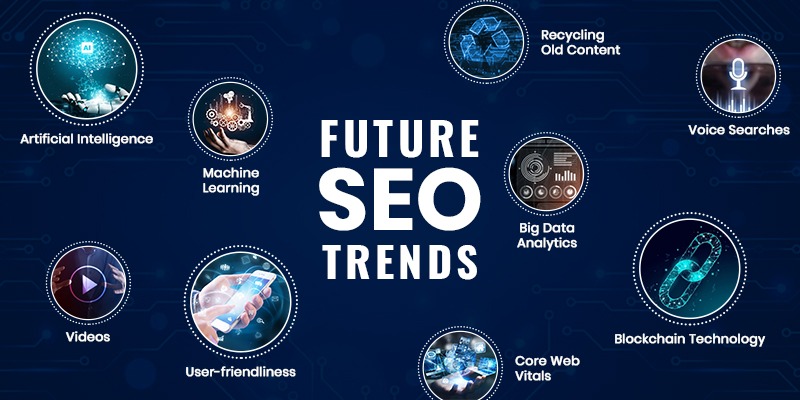
This is true that Search Engine optimization is constantly changing, and evolving. In fact, it is being driven by rapid technological advancement. The future of the SEO services is also influenced by other factors such as the user behavior. As per experts, the trends of SEO services are likely to change. SEO is going through transformative change. Now, the businesses are looking forward to establishing better connections with the audience. It is important to establish better connections with the audience because businesses get more opportunities to grow.

There are many emerging trends to watch such as the enhancing use of artificial intelligence. New techniques are emerging such as voice search. Smart and astute businesspeople keep a tab on the emerging trends. How will innovation impact the business? It is very important for businesspersons to find an answer for this question. In the current era, it is important for the business to reshape and set its SEO strategies on a regular basis. For a business, it is important to examine the innovation and learn how to use the same in the next project. Today, almost all businesses have digital marketing teams, and it is important for them to become familiar with SEO

For businessmen, it is important to understand how to stay ahead in a dynamic environment. As and when necessary, the business must adapt to new changes. The businesses must ensure that their websites are visible and competitive in the ever-changing digital realm. There are several important trends that you must watch:

Artificial intelligence will dominate the SERP

It is true that there is a big chance that artificial intelligence will dominate the SERP. In the modern era, artificial intelligence features have been integrated into the search experience. This is true that for different types of search queries, the Search Engine giant, Google has started delivering the AI-generated response. There is no need to browse through multiple websites, and you can find all types of information with the help of AI-generated content. Artificial intelligence is not just a part of science-fiction movies. Today, you can find the use of artificial intelligence in the Search Engine Optimization as well. 

With the passage of time, Search Engines are increasingly relying on artificial intelligence to deliver better search results. With the help of the AI, it is possible to analyze the pattern, the preferences of the user. Now, the Search Engines are capable of understanding the true needs of the users and delivering content that can meet their needs. 

Personalized search experience

This is true that personalized search experiences have also become popular. The personalized search experience means search results that have been customized for the user on the basis of their search history, personal preferences and other factors. With the help of machine learning, the Search Engines are capable of delivering tailored results based on user results. When there is a focus on the factor of personalization, such content is created that resonates with a diverse audience. 

Voice search optimization

There has been a steady rise in the number of smart devices. Now, you can see more and more people using smartphones, tablets. Hence, many companies have started changing their SEO strategies. Now, they have started optimizing for voice-based queues. There is more focus on question-based keywords. In order to ensure that the user understands everything, there should be the use of conversational phases and natural languages. Concise answers are available in the search results. Now, more and more businesses are investing money to make the latest and most advanced types of websites that can serve the shopper, netizen, and user in a much better way.

Compatibility with the mobile

Today, everyone has the latest smartphone along with almost unlimited internet connections. Hence, more and more people have started devoting extra time to the smartphones and while browsing through a website, they prefer using the smartphone. Now, mobile-first indexing has become a standard, and modern websites are also prioritizing mobile compatibility. It is interesting and important to note that the Search Engines consider the mobile version of the website for ranking and indexing. Now, almost all businesses are creating such websites that can be easily used on the smartphone.

Responsive web design

Today, the importance of responsive web design is known to us. If there is responsive web design, it can ensure seamless experience across various types of devices. Today, the websites are not accessed only over the laptop but other smart devices such as the smartphone, tablet, laptop, etc. When the website functions in a flawless manner, then it becomes easy to reduce the bounce rate. Today, all the websites want to reduce their bounce rate, and it is possible to achieve this goal. There are several strategies that can be used to reduce the bounce rate. 

Once the bounce rate is reduced, it is possible to grab better job opportunities. The website must properly show scaled images and other types of media. The website must adjust as per the screen of the device. In the current era, the use of the Internet has gone up excessively. Many netizens and users browse through the website at odd times such as late at night or during travelling. Hence, it is important to ensure that the website is responsive, and it helps the business to grow at an impressive pace. 

Improving the page speed

It is now important to improve the page speed as well. This is important to know that the page speed continues to remain a popular and vital ranking factor. There are many methods to optimize the mobile pages such as compressing the files and images, minimizing the redirect and leveraging browser caching.


How does interlinking influence SEO as well as the user experience?

Boosting the performance and visibility of the website is a very challenging task. There are many technical aspects to consider and a lot of strategies have to be applied to uplift the ranking of a website. All of us are familiar with the term “backlinks” and it is also known to us that even a few backlinks can provide impressive results. The old pages can be easily kept alive with the help of the interlinking. 

It is important to note that internal interlinking is an important way of improving the website’s Search Engine Optimization. It should be very easy for the crawler to find the relevant and concerned pages. All important technical aspects must be considered in order to achieve the desired results because the world of SEO is very complex. If all the pages of your website are properly interlinked, surely your website will quickly get indexed in the directory of the Search Engines, thus ensuring impressive results. 

Keep the old web pages active with the help of the interlinks

Generally, on a website, there is enough content. It is important to ensure that all the content uploaded on the website is relevant. There is also a possibility that a few pages can collapse on their own if proper interlinking is not done to them. Also, such pages are not easily found by the Search Engines, and in the end, their full organic ranking potential will get affected. The old web pages can be easily kept active with the help of the efficient central backlink strategy. The older pages can still be relevant, and it is important to train them as well. The older and relevant pages can be linked with the latest content that has been uploaded on the website. There is a big possibility that the latest content can fetch more organic traffic after they have been indexed by the Search Engines. With the help of the interlinks, the popularity of the newer pages can be en-cashed by directing traffic to older (relevant) pages.

Generating more traffic from fewer backlinks

It is possible to generate more traffic from fewer backlinks, but the best strategies have to be applied. If you believe that all your backlinks are based on the homepage, you must ensure that all the other webpages are also linked to your homepage in order to make sure that they are visible to the crawler. In this way, it can be ensured that the traffic is smoothly flowing from one page to another.

The influence of the interlinking on the user experience (UX)

The interlinking definitely affects the user experience, and this fact cannot be ignored. The users and netizens definitely appreciate such websites that offer all the information in a proper manner. All the information should be available under one roof in an organized manner. Generally, the user browses through several web pages before collecting all the information. It is important to retain the user by increasing his or her dwelling time. If the user is retained properly, the bounce rate can be diminished. All the websites succeed only if they succeed in retaining the users. It is important for the website to have excellent content, informative and unique content. With the help of the interlinking, more doors can be opened for the users in order to discover new and more relevant things. It is very important to improve the user experience so that he or she returns to the website again and again. Creating a website is never easy, but retaining the loyal customer base is also a big challenge.

Ensuring the interlinking structure is good

It should not be forgotten or ignored that only relevant interlinks that have clear labels for navigation deliver results at the end. The interlinks should be placed in such a manner that it should be easy to find them or else they will lose their exact purpose. For example, if your website has features such as navigation bar and functional drop-down menu that has links to relevant topics on the home page, surely your website will benefit from the interlinks. All the users browsing through the home page will surely reach out to the menu that is offered by your website. Consequently, they will navigate to such sections of the website that they have to offer and navigate to the section that appears more relevant to them. These days’ most websites follow such structures in order to succeed.

Other types of interlinking on the web page

Apart from the navigation bars and the drop-down menus, you can find other forms of the interlinks that are used by the website. In one type of interlinking, you can find images that have page links behind them and in other content interlinks that are connected in the texts that are displayed on the page. It is important to encourage the users to interact with the website. This constant interaction is very valuable from the SEO point of view. In simple words, if there is no optimized anchor text in the URL, or there are no deep links for indexing the page promptly, users are likely to encounter difficulty in locating the page, unless and until interlinks to them truly exist.

Show relevant content 

The content present on the website is the best place to insert site links without disturbing the user experience. A link placed on the content gives a signal to the user that if you want to collect more information, please click on the link. It is important to have a clean site architecture, and there should be relevant interlinks that are instrumental in making the website SEO-friendly. Moreover, relevant interlink also enhances the user experience. The webmaster must ensure that the website does not have any broken links. 

Check our all news