The Future of ERP Software and the Role of Generative AI

Enterprise Resources Planning (ERP) software has been a digital backbone of the modern organizations and has been used to integrate different functions of the business into one system. ERP systems have helped companies to simplify their business operations, enhance efficiency, and make intelligent decisions using real-time data from the finance, human resources, supply chain management, and production sectors.

The business world is however evolving at an unimaginable rate. With the dynamic markets and an increasing number of customers with intricate demands, and data, which is increasing exponentially, the old forms of ERP systems are challenged. Generative Artificial Intelligence (AI) is an opportunity to transform the very principles of the ERP systems to a point where they go beyond being automated and become intelligent in collaboration and decision making.

This blog examines how Generative AI is transforming the definition of ERP systems, the possibilities and risks, and what the future could be like to enterprises that adopt this very transformative technology.

Understanding ERP Evolution

ERP software is no longer in its infancy as it was way back in the late 20 th century. The first ones were systems that concentrated on inventory management and manufacturing resource planning, which eventually transformed to a full-fledged business management solution.

The current ERP systems combine various departments and functions within one digital ecosystem and grant visibility, consistency, and control. They enable organizations to address all their processes such as procurement and production, payroll and compliance in an interconnected module.

However, most ERP systems are still too reactive and not proactive, in spite of their sophistication. They are also based on hard data sources and hard-code processes. Although automation has eliminated human effort, decision-making remains an activity that requires a human being and human analysis.

There is where Generative AI comes in the picture, as it allows ERP systems not only to analyze data but also to produce insights, predictions and strategies in real-time.


What Is Generative AI and Why It Matters for ERP

Generative AI is a type of artificial intelligence that is capable of generating new texts, concepts and solutions based on the existing data. Contrary to the classical AI models that are able to identify trends or draw categories, Generative AI is able to produce human responses, write draft documents, create solutions, and even give a simulation of the consequences of decision making.

In the context of ERP software, Generative AI can:

  • Analyze large volumes of structured and unstructured data from across the enterprise. 
  • Generate reports, summaries, and recommendations automatically. 
  • Predict potential business challenges or opportunities. 
  • Facilitate human-like interactions through conversational interfaces. 
  • Support decision-making by simulating different business scenarios. 

How Generative AI Is Transforming ERP Systems

1. Intelligent Data Interpretation and Reporting

Automated interpretation of data is one of the most effective uses of Generative AI in ERP systems. Rather than manually analyzing data or using static dashboards to analyze it, AI models can process massive amounts of data in real-time and produce a narrative to explain important trends, anomalies, and suggestions.

As an example, a finance manager may query the ERP system, i.e., why has our revenue decreased by last 3 months and will get a full answer including visualization of data and a bigger picture. This lessens the process of manual reporting and helps the decision-makers concentrate on the strategic moves as opposed to data collection.

2. Predictive and Prescriptive Insights

The legacy ERP systems were giving past data and poor predictions. Generative AI transforms ERP software into a predictive and prescriptive one.

AI-driven predictive analytics has the capability to predict a sales trend, demand, or supply chain disruption using real-time data. Prescriptive capabilities go a step further and suggest the optimal things that can be done so as to maximize the outcomes, be it scheduling of production, budgeting placement or staffing.

This move helps organizations take steps ahead of time thereby minimizing risks and grabbing opportunities before they occur in full form.

3. Conversational Interfaces and Natural Language Processing (NLP)

The combination of the natural language processing enables a user to communicate with the ERP systems in a way that he or she could be communicating with a human expert. Employees do not have to go through complicated dashboards; they can just type or voice queries like, “Display the top five customers that made purchase this month by revenue or create a purchase order of raw materials.

This renders the ERP software more available and user-intuitive, lowering the learning curve and promoting the use among the various departments. It also enables non-technical employees to utilize the maximum power of enterprise data without having to have high capabilities of analysis.

4. Automation of Complex Workflows

Generative AI over and above the automation through the already existing ERP systems introduces an intelligent layer on the automation. It is able to derive context, make adjustments to previous decisions and adjust finely without the need to be explicitly programmed.

As an example, artificial intelligence can automatically authorize low risk transactions, create compliance records, or even make workflows that are optimized, taking into account performance history. The system is more efficient with time as it keeps learning through user interactions and results.

5. Enhanced Customization and Adaptability

All organizations work in different ways and one of the most significant issues of ERP implementation has been customization. This is dealt with by generative AI by automating personalization.

AI models have the ability to study business processes, detect inefficiencies, and propose changes in the configuration of the system to align the ERP system with the specific requirements of a company. This significantly saves on time and cost of customization and updating the system.

ERP systems may develop in the future as self-optimizing systems and adapt their own workflows as business conditions evolve.

6. Strengthening Decision-Making and Strategic Planning

The executives can be in a situation where they need to make decisions of high stakes involving incomplete or even old data. Generative AI gives decision-makers the power to simulate different situations, e.g., expansions of the market, pricing, or supply-chain changes, and forecast the likely results.

This feature will enable the ERP system to be a decision intelligence platform and the leaders can evaluate risks, test hypotheses, and formulate informed strategic decisions based on data-driven simulations.

Benefits of Generative AI-Driven ERP Systems

The convergence of Generative AI and ERP technology brings several tangible benefits:

  • Increased efficiency: Automation of manual tasks frees employees to focus on innovation and problem-solving. 
  • Improved accuracy: AI-driven data analysis minimizes human error and enhances reporting precision. 
  • Real-time decision support: Predictive and prescriptive analytics provide timely insights for better decision-making. 
  • Enhanced collaboration: Natural language interfaces make it easier for teams to share data and insights seamlessly. 
  • Scalability: AI models enable ERP systems to adapt dynamically as organizations grow or pivot. 
  • Reduced costs: Intelligent process optimization lowers operational costs and improves resource utilization.

Challenges and Considerations

Despite its promise, integrating Generative AI into ERP systems is not without challenges.

  1. Data Privacy and Security: AI models rely on large datasets, which may include sensitive business information. Ensuring data governance and compliance with privacy regulations is critical. 
  2. Ethical Use of AI: As AI systems gain autonomy, organizations must establish ethical guidelines to prevent biased or unethical decision-making. 
  3. Implementation Complexity: Integrating AI into existing ERP frameworks requires technical expertise and change management to ensure smooth adoption. 
  4. User Trust and Training: Employees may initially resist AI-driven changes, fearing job displacement or system errors. Building trust through transparency and proper training is essential.

The Road Ahead: What the Future Holds

The intelligence, adaptability, and autonomy will characterize the future of the ERP software. With the ongoing development of Generative AI, the ERP systems will change their role as data management tools and become strategic allies in business expansion.

We can expect future ERP solutions to feature:

  • Continuous learning capabilities that allow systems to adapt to market dynamics automatically. 
  • Augmented decision-making tools that combine human judgment with AI-generated insights. 
  • Seamless integration with IoT, blockchain, and cloud technologies to create a unified digital ecosystem. 
  • Hyper-personalized user experiences, where the ERP interface adapts to each user’s role and behavior. 

Conclusion

The generation of AI into ERP software is the start of a new dawn in managing enterprises. It is starting to replace the previously non-dynamic system of record with a dynamic, intelligent platform that can learn, reason and collaborate with humans.

Those organizations that absorb this change will be able to have a competitive advantage, they will be more nimble, visionary, and efficient. Although privacy concerns like data security and ethical use of AI are issues that should be handled with caution, the possibilities greatly surpass the dangers.

Generative AI will reshape the business planning, operations, and growth in the next few years. The future of ERP will not merely be the management of resources it will enable intelligence where data will be turned into strategy and success.

What will be the special features and designs of the futuristic e-commerce websites?

All of us know that the realm of digital marketing is constantly evolving. It is important to note that everyday algorithms and trends keep on changing. It is important for the business to keep pace with the changes and modify itself. Now, everything is becoming digital with the passage of time. There is no need to step outside the home for shopping. Everything can be purchased comfortably from the home. You can use the system of digital shopping to purchase your favorite products. 

E-commerce is now an integral part of our life because it is helping us with tasks such as shopping. As technology is upgrading and advancing, it is undergoing significant transformation. The number of websites is growing quickly, and it is important to keep modifying the website in a proper manner. The website should be easy to use, innovative, properly designed and ensuring seamless integration with the emerging technologies is also necessary. 

Responsive design of the website

The e-commerce website should be easy to use, and the website should be easy to use across several platforms. Today, the users use the website on smartphones, laptops, tablets and other devices. The website should be optimized properly for all types of devices. The usage of mobile is growing, and as a result, newer web designs are coming into existence. The user-friendly interface should be used for smaller displays. The website should be designed in such a manner that it can be used to easily access all the platforms. 

Delivering a personalized user experience 

In the future, more advanced websites will be designed. The user must get a better and superior experience. In the future, artificial intelligence (AI) will be used extensively. The website will be smart enough to assess the user’s behavior. Customized e-commerce website development has the capacity to boost the client’s engagement and raise the level of business. Many users get attracted to such businesses that are properly designed.

Immersive technology 

For an e-commerce website, it is important to maintain a connection with the netizen. So, there is a big role for Augmented Reality (AR) and Virtual Reality (VR). In the modern era, websites are able to make virtual representations. The potential shoppers have to be impressed with the help of Augmented Reality (AR) and Virtual Reality (VR). By delivering an immersive experience, the customer’s confidence can be boosted. When the customers get a pleasurable shopping experience, they return again and again, thus giving a big boost to the business. 

Voice activation implementation 

The future of the e-commerce website is surely very bright. In the coming days, you will find many websites with features such as voice commands. Today, several types of voice-activated gadgets are becoming popular. Many smart machines react to the voice commands and complete the tasks. In the future, we will find such websites that will function and react as per the command of the users. Surely, such websites will deliver a pleasant experience to the users. You can easily discover the products or services you have been looking for. 

Using minimalist design but creating the best impact

The trend of using the minimalist design has not faded away. The minimalist design means using a style that has simple color, shape and other elements that can create a clean as well as aesthetic look. Minimalistic ecommerce design will remain popular in the future as well. Although clean and uncomplicated interfaces are also popular if they have correctly positioned components. It is important to arrange a clutter-free user experience. The modern website should be easy to navigate, the website should have a fast loading time. The visitors must have a very pleasant experience if the website can be used smoothly.

The role of the blockchain in security and transparency

In the futuristic e-commerce websites, the blockchain technology will play several important roles. With the help of advanced technology, the level of security and transparency can be increased. In the futuristic website, you will find many features. If there is the implementation of blockchain in the payment operations, the risk of fraud can be reduced and the customer trust can be increased. More and more customers prefer to use such websites that have robust and the latest security arrangements. When the online shoppers get a secure online purchase environment, they come back again and again. More and more online shoppers prefer to use such websites that are secure as well as transparent. 

Integration of the social media

All of us know the impact of social media on our modern life. The futuristic websites will be integrated with the social media platforms. In fact, even today many websites are already connected with the social media accounts of the businesses. Such connections prove useful. It can be said that the future of e-commerce website design is very bright because there is very high emphasis on providing the personalized, immersive and secure online purchasing experience. In the future, such e-commerce websites that embrace innovation will rule.

The instrumental role of UX/UI in improving the user experience on your website 

In the last few years, the importance of the user experience in mobile apps, web design has undergone a transformative shift. Now, such days are part of history when aesthetics was the key focus of the design. In the present digital age, all businesses aim to have the best website that can deliver the best user experience. The users are becoming more discerning with the passage of time and the businesses have recognized the importance of the UX/UI designs. With the help of a special strategy, a business can foster user engagement as well as loyalty. The advent of handheld devices such as tablets and smartphones have particularly increased the demand for responsive as well as user-centric designs. 

In the modern age, the user experience is no longer confined to the desktop but spans to multiple devices, contexts and screen sizes. It is a duty of designers to maintain the balance between the functionality and the aesthetics. At the same time, it is their duty to ensure an enjoyable experience across diverse platforms. With the passage of time, the technology is changing, and now the users want a smooth experience while browsing the website. 

The website must impress the users 

Many people believe that the users solely focus on the appeal of the website, but this is not at all true. The website should be easy to use, and it must have the best features. Many brands create a website that is their own reflection. It can be said that UI is like the face of the brand, and it reflects its personality. On the other hand, it can be said that UX means how the user feels while using the website. It is just like choreographing a dance. Each step in the dance has a purpose. So, the website developers have to ensure that the user is happy while using the website. The website developers must deliver such a digital experience that people simply love to use. 

It is not wrong to say that UI/UX design is the heartbeat of aunty digital experience. The UI is a game of colors and layouts, it is just like setting a stage, whereas the UX means the seamless flow of the story. A website should be pretty, easy to understand and use. Everyone who uses the website should be comfortable, and it is not just about making this pretty, the website should be smooth and enjoyable to use. The UI and UX is about making the technology a friend and not a hurdle. Some of the crucial aspects of the UI/UX design:

  • User-centered design
  • There should be simplicity and full clarity
  • Responsive design is appreciated by the users
  • User flow and architecture 
  • Accessibility and inclusivity 

The growing impact on the UI/UX on the user engagement 

For the website, it is extremely important to make a lasting impression. Many users give first priority to the visuals and the aesthetics. The user must find it easy to use the website. With the help of the UI/UX, it is possible to create such an experience that only appears good but also feels like a natural extension of the user’s intention. 

Enhancing user satisfaction

The UI and the UX have many different roles, and it is not just about making the user feel good while interacting within a digital platform. It is about creating a smooth experience that the user certainly notices. When the user is satisfied with the website, he or she is likely to explore the website, engage with some services and stick around, which is certainly very beneficial. Enhancing the user satisfaction is literally very important, and there are many techniques. The UI and UX designs help the user to connect with the website. The digital environment should be such that the user must find a connection. 

Boosting suability

When the netizen gets a user-friendly experience, they prefer to stay on the website. This reduces the bounce rate and the website becomes popular. Whenever the user encounters any trouble while navigating the website, they simply disengage. With the help of UI and UX, it is possible to boost the engagement and also build more trust and loyalty. If there is a positive impact on the user, it can increase the conversation and user retention. If a website wants to give the user a successful digital experience and enjoyable interaction, then it is important to understand the role of the UI and UX. The impact of the UI/UX on user engagement is just like the role of a conductor in an orchestra. On the other hand, if the usability is poor, the navigation is confusing, then the user can walk away citing frustration. 

Enhancement in the conversion rate

A well-designed website helps the business to succeed. If a website is properly designed with all the elements, the chances of conversion are likely to enhance. Please understand that UI and UX are not just about meeting the user’s needs but about creating a special experience. 

Ensure the security of your website by using best practices for web security 

We are aware that the cases of cyber attacks are rising, and this clearly underlines that there is a critical need for very robust security measures. Almost all sectors are facing cyber attacks such as banking, finance, healthcare, etc. The websites of all institutes and businesses should be properly protected from the threat of cyber attacks. The websites of big businesses and famous institutes are always at risk because they are the first target of hackers and criminal elements.

With the help of robust security measures, it is possible to secure the website from different types of threats such as the:

  • Malware infections: There are several malicious softwares that are designed to influence the website’s functionality, steal some data and facilitate unauthorized data. Protect your website from such malware infections.
  • DDoS Attacks: The Distributed Denial of Service can overwhelm the server of a website, and it will be inaccessible to the legitimate users. 
  • Cross-Site Scripting (XSS): In this type of threat, malicious scripts are injected into the web pages that allow the attackers to steal cookies and other sensitive information. 
  • Brute force attacks: It means attempting to gain unauthorized access to a website by trying various username and password combinations. 
  • SQL Injection: This means exploiting vulnerabilities in web applications with the aim of executing malicious SQL commands. This allows the attackers to access, modify and even delete confidential data, sensitive information.

Why should you pay special attention to secure your website?

  • Protecting the sensitive data: Generally, very sensitive information is stored on the website such as the customer’s data, payment details, intellectual property. With the help of robust security measures, it is possible to defend this sensitive information from unauthorized theft and access. 
  • Preserving trust and reputation: If there is a security breach in your website, it can erode the customer trust. So, please give top priority to the website’s protection. It will clearly demonstrate that you want to protect the customer data and maintain a secure online environment.
  • Complying with rules: There are many industries that are subject to regulatory requirements governing data protection and security. If your website fails to comply, it can lead to heavy fines, legal liabilities, etc. 

What are the benefits if you successfully secure your website?

There are many benefits if your website is secure such as:

  • It enjoys an impressive Google ranking 
  • It is easy to build trust with the users
  • The information of the user remains safe and secure, the website’s legitimacy is increased
  • Increase in the ROI
  • Improvement is witnessed in the site’s performance

How can you keep your website secure?

There are methods through which you can secure your website such as:

Take proper care at the development stages

Web security begins at the development stage. The vulnerabilities can arise due to insecure coding practices, configuration errors and framework choices. Please choose a secure framework that has a strong security track record. Conduct a thorough research and learn about frameworks that are known to have vulnerabilities. Please adopt secure coding practices. 

Always update your website on a regular basis

Please regularly update your website’s software because it is necessary from the security point of view. Please keep your Content Management Systems (CMS) in order to prevent the exploitation of known security flaws. Update all the software that is present on your website that includes themes as well as plugins to mitigate the risk of the attacks.

Conduct continuous vulnerability scanning

Please regularly scan your website for vulnerabilities and conduct penetration tests for identifying the security weaknesses. Make sure that the security arrangement of your website is very robust. You can also consider deploying vulnerability scanning tools for continuously monitoring the website. The periodic penetration testing is possible, and it must be conducted by skilled security professionals. The periodic penetrating testing can stimulate real attacks and can be used for identifying complex security flaws that the automated scanners might miss. Consult with the experts and learn about the latest security measures. 

Ensure that the password is safe and secure 

If you want to ensure security of your website, please make sure that your password is secure. A good password is the first line of defense against unauthorized access. Try to create strong and complex passwords that have both uppercase and lowercase letters, special characters and numbers. Make sure that your website’s password is unique and strong. Consider changing your password after a periodic interval. 

Monitor the traffic surges

It is important to monitor the traffic surges. You can make use of various web traffic monitoring tools to continuously monitor the incoming traffic in real-time. Also, set up the alerts for unusual spikes or patterns that indicate a potential attack. 

Use the best firewall

To protect your website from attack, please use the best firewalls. You can customize the Web application firewalls (WAF) to prevent the XSS attacks, SQL injection attacks, buffer overflows and even session hijacking. Consult with the technical experts and get the best firewall protection for your website. 

Enhancing Your Web Analytics with the Youthtech Solutions Console Tool

Welcome to YouthTech Solutions, where innovation meets practicality in web analytics! Today, we’re excited to introduce our latest offering: the Youthtech Solutions Console Tool. Designed with a focus on usability and robust analytics capabilities, our tool goes beyond the conventional Google Search Console to provide you with deeper insights and greater control over your website’s performance.

Key Features of the Youthtech Solutions Console Tool:

1.User Interface and Export Capabilities

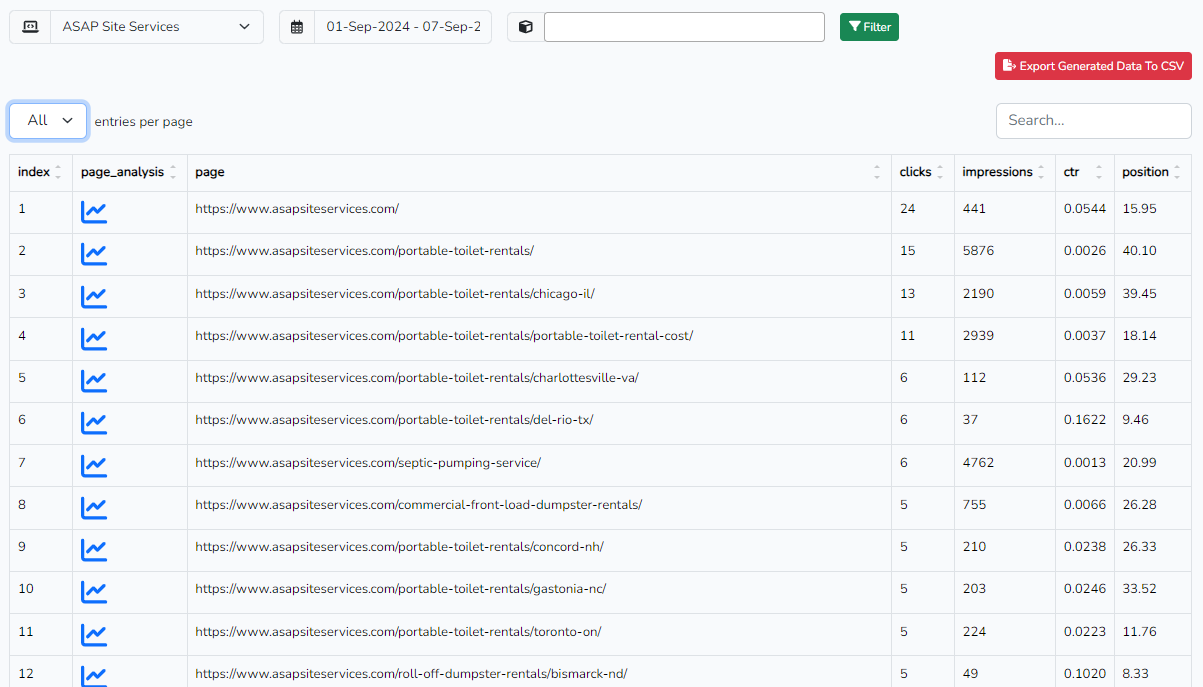
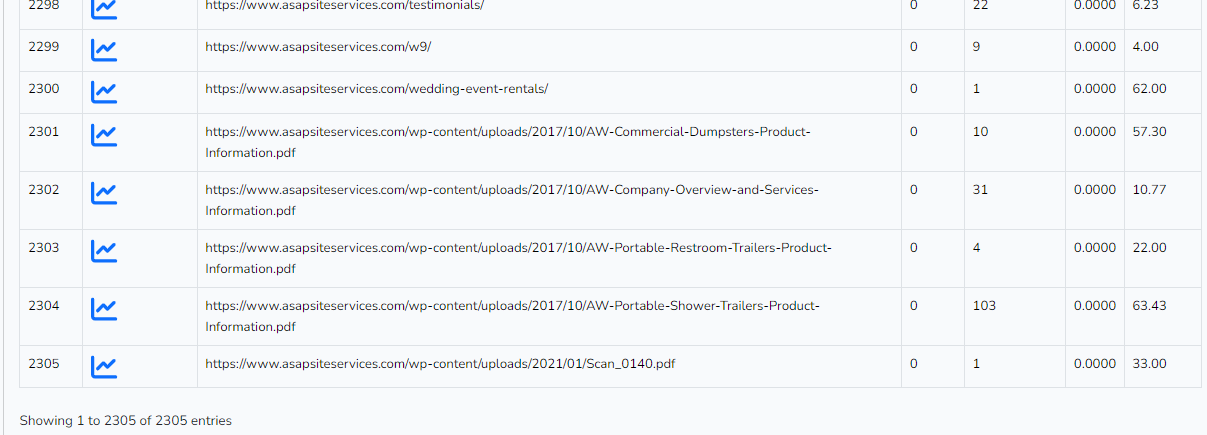
Export more than 1000 rows of data for comprehensive analysis of your webpages.

2. Enhanced Impression Data and Average Position Metrics

Gain deeper insights into how your webpages perform in search results.

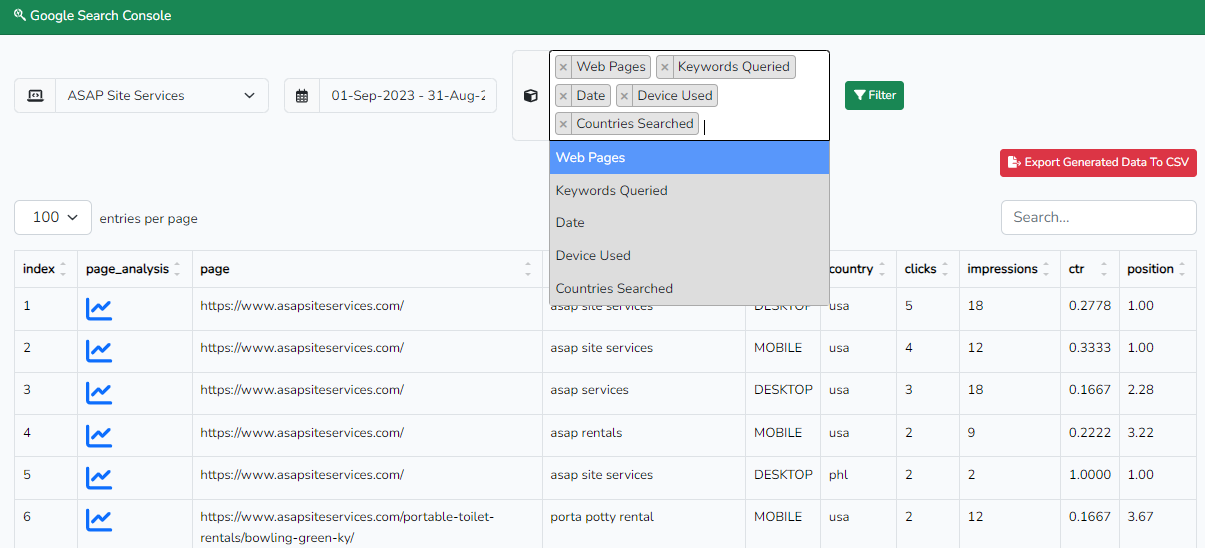
3.Customizable Filters

Filter data based on webpages, keyword queries, date, device, and countries.

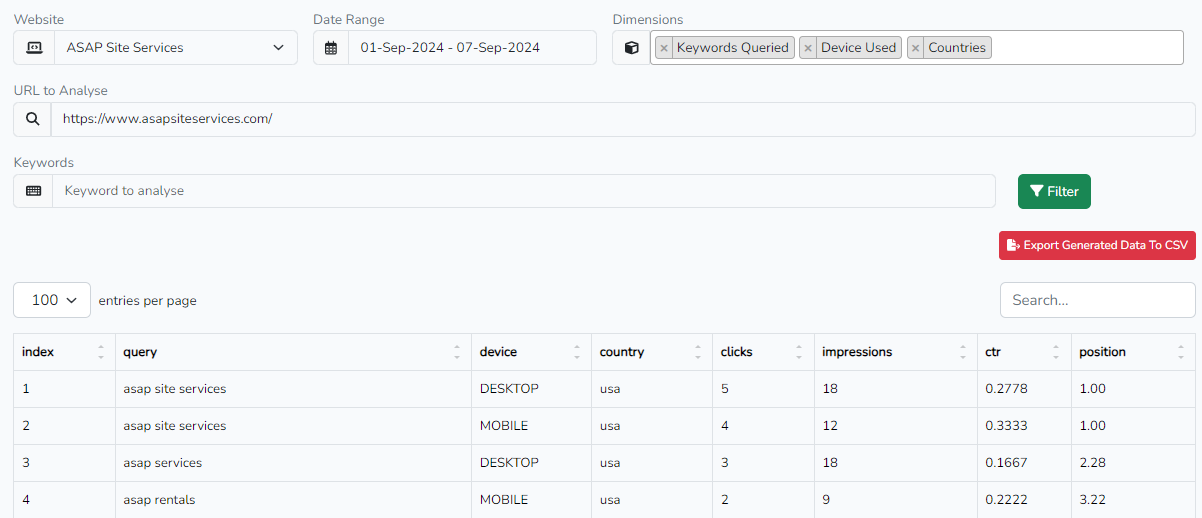
4.Inspect URL Feature

Analyze specific URLs with detailed metrics to optimize performance at a granular level.

Why It’s Special

  • Empowers Detailed Analysis: Provides in-depth insights into individual  URLs, enabling precise optimization strategies.
  • Enhanced Export: Allows for exporting extensive data, facilitating thorough SEO audits and reporting.
  • Customizable Filters: Tailors analysis to specific needs, ensuring relevant and actionable insights.User-Friendly Interface: Intuitive design makes navigating and interpreting data effortless, even for complex analytics tasks.

User Interface and Enhanced Data Export

One of the primary frustrations with existing tools is their export limitations, often restricting you to just 1000 rows of data. At Youthtech Solutions, we understand the need for comprehensive analysis, which is why our Console Tool allows you to export a significantly larger volume of data about your webpages. Whether you’re tracking trends over time or conducting detailed SEO audits, our tool ensures you have all the data you need at your fingertips.

Inspect URL Feature

The Inspect URL feature is a game-changer for anyone looking to dive deep into the performance of specific webpages. Here’s how it enhances your analytics experience:

Improved Impression Data and Average Position Metrics

We’ve also raised the bar when it comes to impression data and average position metrics. Our Console Tool provides more granular insights into how your webpages are performing in search results. You can now track not only impressions and clicks but also the average position of your pages for specific keywords and queries. This level of detail empowers you to make informed decisions about your SEO strategies and content optimization efforts.

Customizable Filters for Precise Analysis

Understanding that every website is unique, we’ve incorporated customizable filters into our Console Tool. You can now slice and dice your data based on various parameters such as:

  • Webpages: Analyze performance metrics for individual pages or groups of pages.
  • Keyword Queries: Explore which keywords are driving traffic to your site and how they’re performing.
  • Date Range: Evaluate trends over specific time periods to identify seasonal variations or campaign impacts.
  • Devices Used: Compare performance across desktop, mobile, and tablet devices.
  • Countries: Drill down into geographical insights to tailor your SEO strategies regionally.

Unique Feature: Keyword Traffic Source Identification

What truly sets our Console Tool apart is its ability to identify from how many pages your website is receiving traffic for a particular keyword. This feature helps you understand the depth of your keyword strategy and pinpoint areas where you can further optimize content to maximize traffic potential.

Conclusion

At Youthtech Solutions, we’re committed to equipping you with the tools you need to succeed in the digital landscape. Our Console Tool isn’t just about data; it’s about actionable insights that drive meaningful improvements in your website’s performance. Whether you’re an SEO professional, a digital marketer, or a website owner looking to enhance online visibility, our tool is designed to streamline your workflow and deliver superior results.

Ready to elevate your web analytics strategy with the Youthtech Solutions Console Tool? Reach out to our team to schedule a demo, request pricing information, or explore how our tool can transform your digital insights.

Check our all news