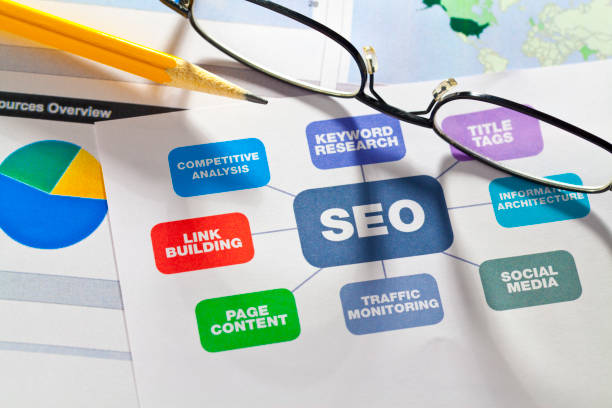
You need to develop your eCommerce store because online retail businesses face tough competition. The large number of businesses that pursue online visibility makes search engine optimization (SEO) the most effective method to generate steady website traffic while boosting sales. An effective SEO strategy enables your products to reach customers at their most active search times. The proper implementation of SEO will lead to better search rankings and improved user experience and increased conversion rates.
Why SEO Matters for eCommerce
SEO creates permanent visibility for websites while paid advertising stops delivering results after budget exhaustion.Your product pages receive higher search engine rankings which result in organic traffic from users who specifically search for your products. Users who visit your website show strong purchase intent which increases their chances to make a purchase.
Effective eCommerce SEO improves:
- Organic traffic
- Brand visibility
- Customer trust
- Conversion rates
- Revenue growth
By optimizing your online store strategically, you create a sustainable sales channel that works around the clock.
Keyword Research: The Foundation of Success
Every strong SEO strategy begins with thorough keyword research. For eCommerce, this means identifying terms your potential customers use when searching for products.
Focus on:
- Product-specific keywords (e.g., “wireless noise-canceling headphones”)
- Category-based keywords (e.g., “men’s running shoes”)
- Long-tail keywords (e.g., “best waterproof hiking boots for winter”)
Long-tail keywords demonstrate lower competition rates while displaying higher chances of conversion because they directly show customer purchasing intentions. The natural implementation of these elements into product titles and descriptions and category pages will boost our chances of ranking in relevant searches.
Optimize Product Pages for Conversions
The central element of every eCommerce website exists within its product pages. The product pages need search engine optimization together with user experience optimization.
Create attractive product titles which contain essential keywords as your starting point for product development. The writer must create original content that describes product benefits and features through detailed usage instructions. The writer should not replicate manufacturer descriptions because duplicate content will decrease their search engine rankings.
Other important elements include:
- High-quality images with optimized alt text
- Clear pricing and availability information
- Customer reviews and ratings
- Strong call-to-action buttons
Well-structured product pages not only rank better but also encourage customers to complete purchases.
Improve Site Structure and Navigation
A clear and logical site structure helps search engines crawl your website efficiently. The system improves user experience which directly affects SEO performance.
Products need to be organized into categories that match their appropriate subcategories. Users should use breadcrumb navigation which assists them in understanding their current position within the website. The system requires that all essential pages should be reachable through no more than two clicks from the main page.
The optimized structure enables proper authority distribution to all website pages while assisting search engines with content indexing.
Focus on Technical SEO
Technical SEO ensures that your eCommerce site functions smoothly and meets search engine requirements. Even the best content may struggle to rank if technical issues exist.
Key technical factors include:
- Fast page loading speeds
- Mobile responsiveness
- Secure HTTPS connection
- XML sitemap submission
- Clean URL structures
Page speed is especially critical. Slow-loading websites increase bounce rates and reduce sales. Compress images, minimize unnecessary scripts, and use caching to enhance performance.
Create High-Quality Content
Content marketing helps eCommerce SEO by bringing in users who are at different points of their purchasing process. Informative blog posts, buying guides, comparison articles, and FAQs can target informational keywords and build trust.
A detailed buying guide helps customers to understand product differences which enables them to make informed decisions. This approach establishes your brand as an authoritative source while guiding users to your product pages.
Search engines interpret new valuable content on your website as evidence that your site maintains current active status.
Optimize for User Experience
Search engines give preference to websites that provide better user experiences. Your website will experience ranking decreases when users exit your site within a short time. Create a user-friendly navigation system which includes buttons that users can easily activate and a checkout process that users can complete without difficulty.
Your website needs mobile optimization because it has become an essential requirement. Your website needs to deliver an uninterrupted mobile shopping experience because customers now use smartphones for online shopping.
Clear return policies and transparent shipping details establish secure payment gateways which boost customer confidence that leads to higher purchase completion rates.
Leverage Internal Linking
Internal links establish connections among products, categories, and blog content which maintains their relationship to each other. The method enables search engines to comprehend page connections while it distributes link authority throughout the website.
When a blog post about “summer fashion trends” includes links to relevant product pages, it enables the website to attract visitors who are specifically interested in its content. The practice of intelligent internal linking leads users to visit additional pages, which results in longer website sessions and increased chances of generating sales.
Encourage Reviews and User-Generated Content
Customer reviews create new content for product pages, which enhances their credibility. Search engines prefer websites that update their content regularly, which reviews accomplish through their inclusion of pertinent search terms.
Positive ratings and testimonials also influence buying decisions. Businesses should ask happy customers to write reviews, and they should answer customer feedback in a professional manner to build their credibility.
Monitor Performance and Adjust Strategy
SEO requires ongoing work because it involves more than one initial task. The team should use analytics tools to track performance because they need to assess traffic patterns and keyword rankings and bounce rates and conversion rates. The team should find pages that perform poorly and enhance them through new content and superior keywords and better design.
Continuous improvement ensures your store stays competitive in evolving search landscapes.
Conclusion
The eCommerce business can use search engine optimization techniques to enhance its organic traffic while increasing its sales revenue. The digital store will achieve customer attraction and conversion success through its implementation of keyword research combined with product page optimization and technical foundation development and content production and user experience design.
The online retail business will achieve its most economical and lasting growth results through search engine optimization because it requires both time and steady dedication.

